
Sample Pages
A family history from Orcas Island Press is a book to be read first and consulted after. It opens as a story — the people, the places they left and the places they made — and it closes with the apparatus that lets a grandchild check every line.
Specimen pages from two illustrative books. The families, places and captions are invented for this page.
Two books from the catalog
Each book opens on a quiet title page, and the story begins a few pages on.
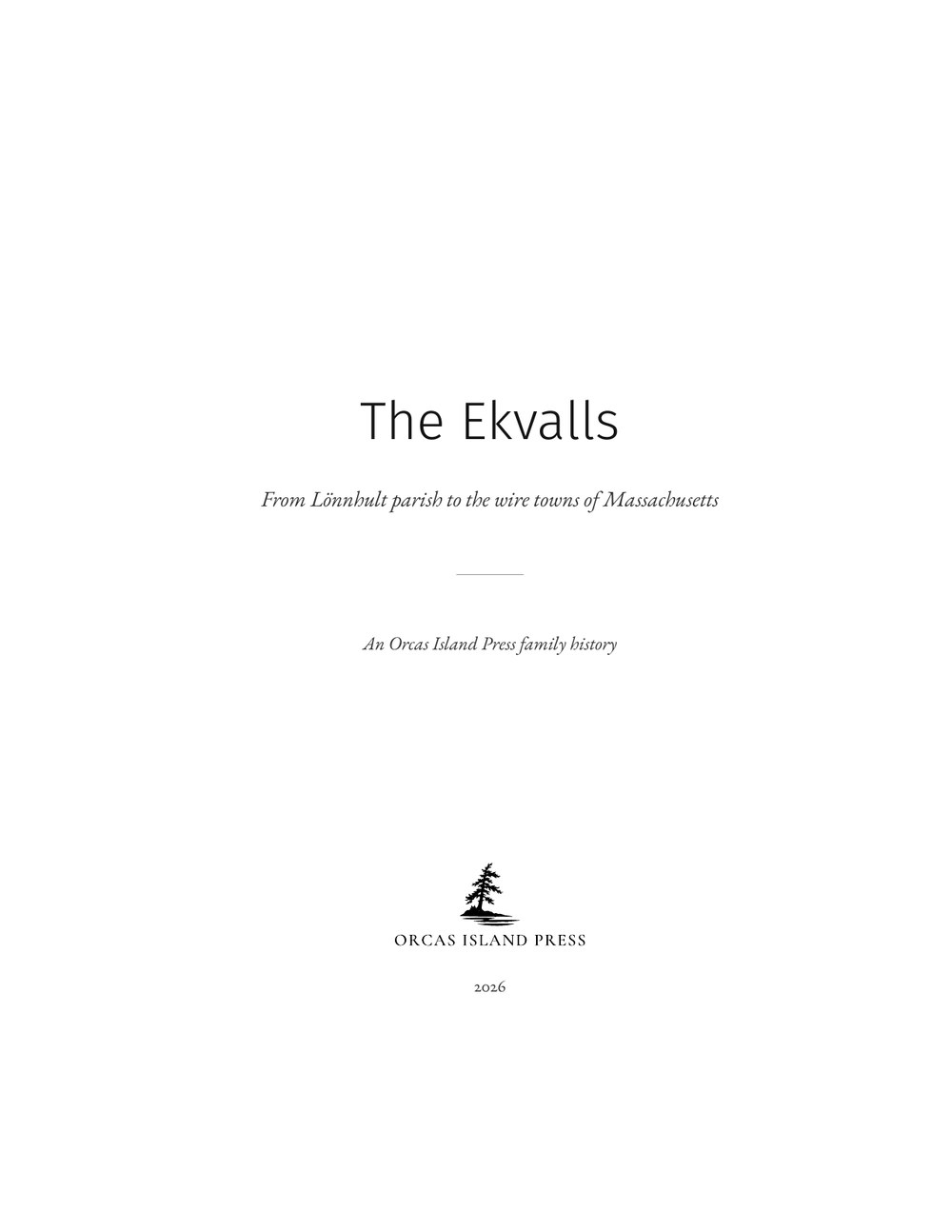
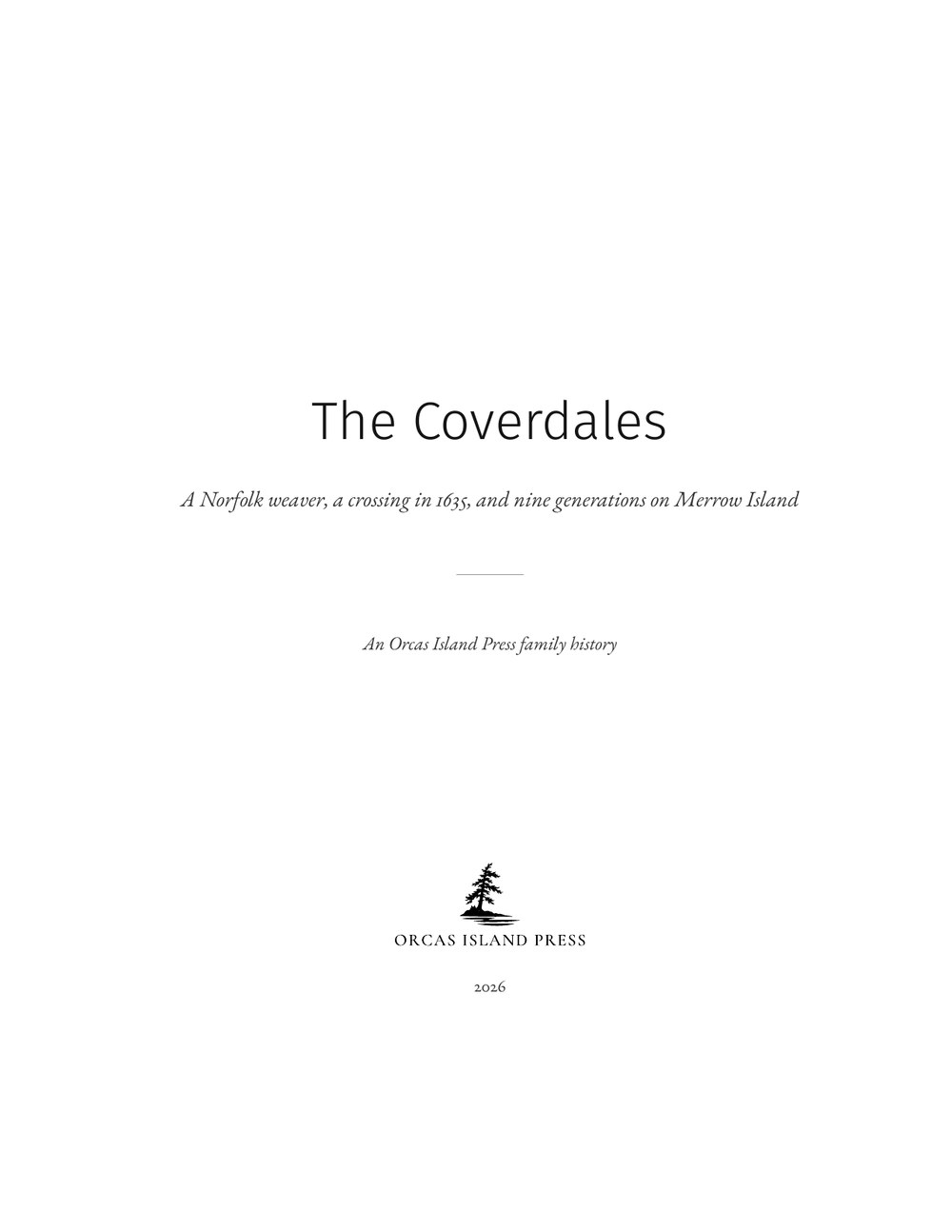
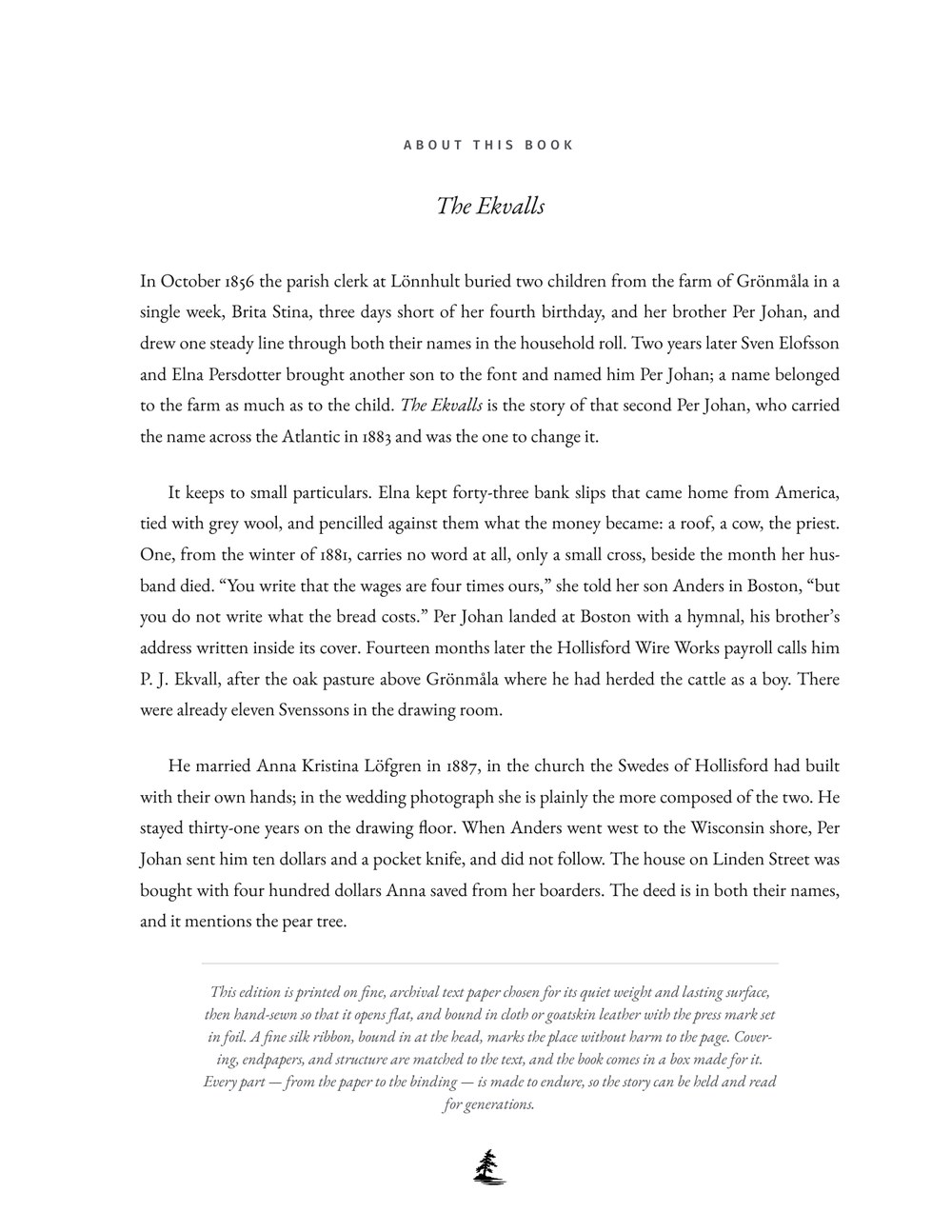
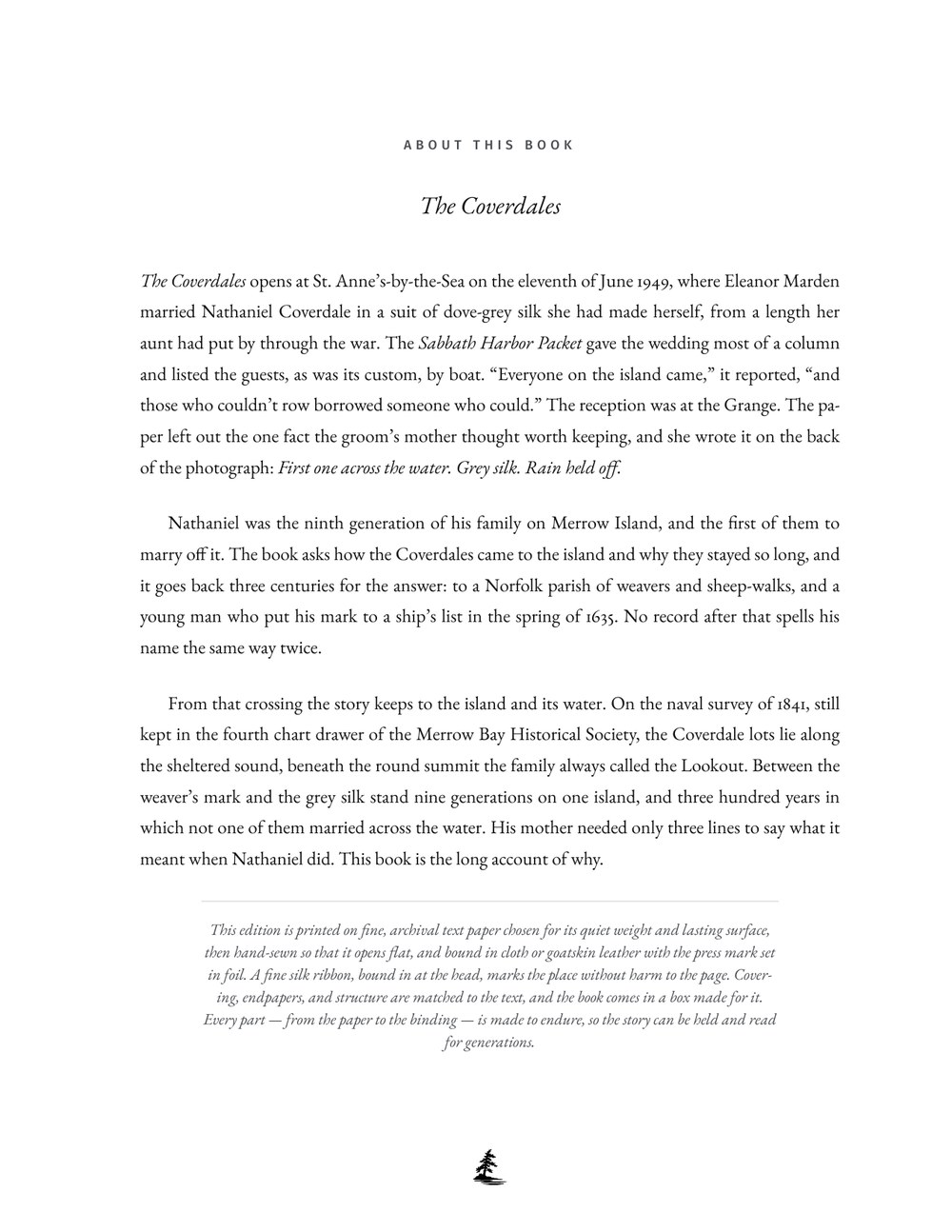
About this book
A page about the people and the place, written like the inside flap of a jacket.
Contents
Chapters in the order the lives were lived, each broken into its sections, notes and plates, with the records, the indexes and the sources kept at the back.
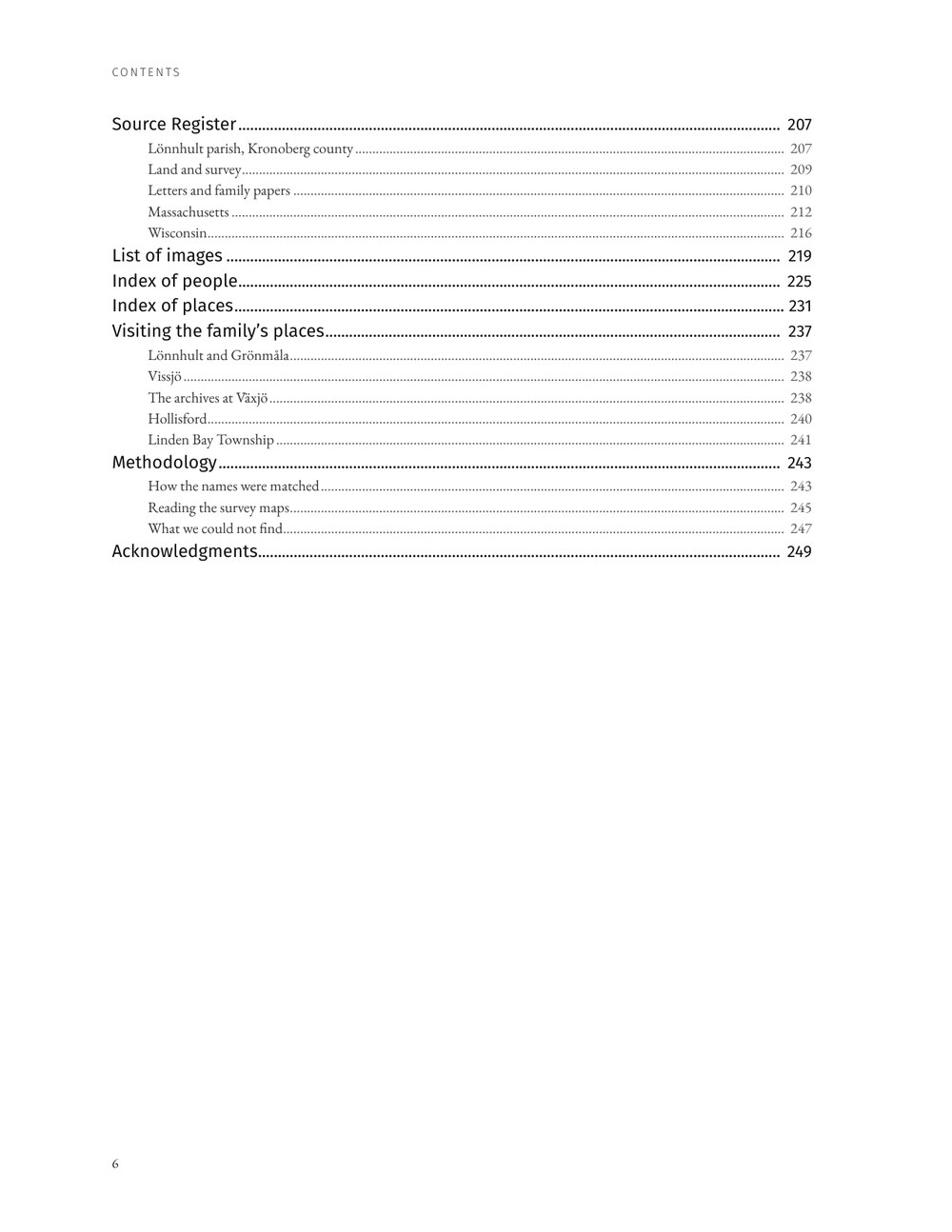
The Ekvalls · four pages of contents
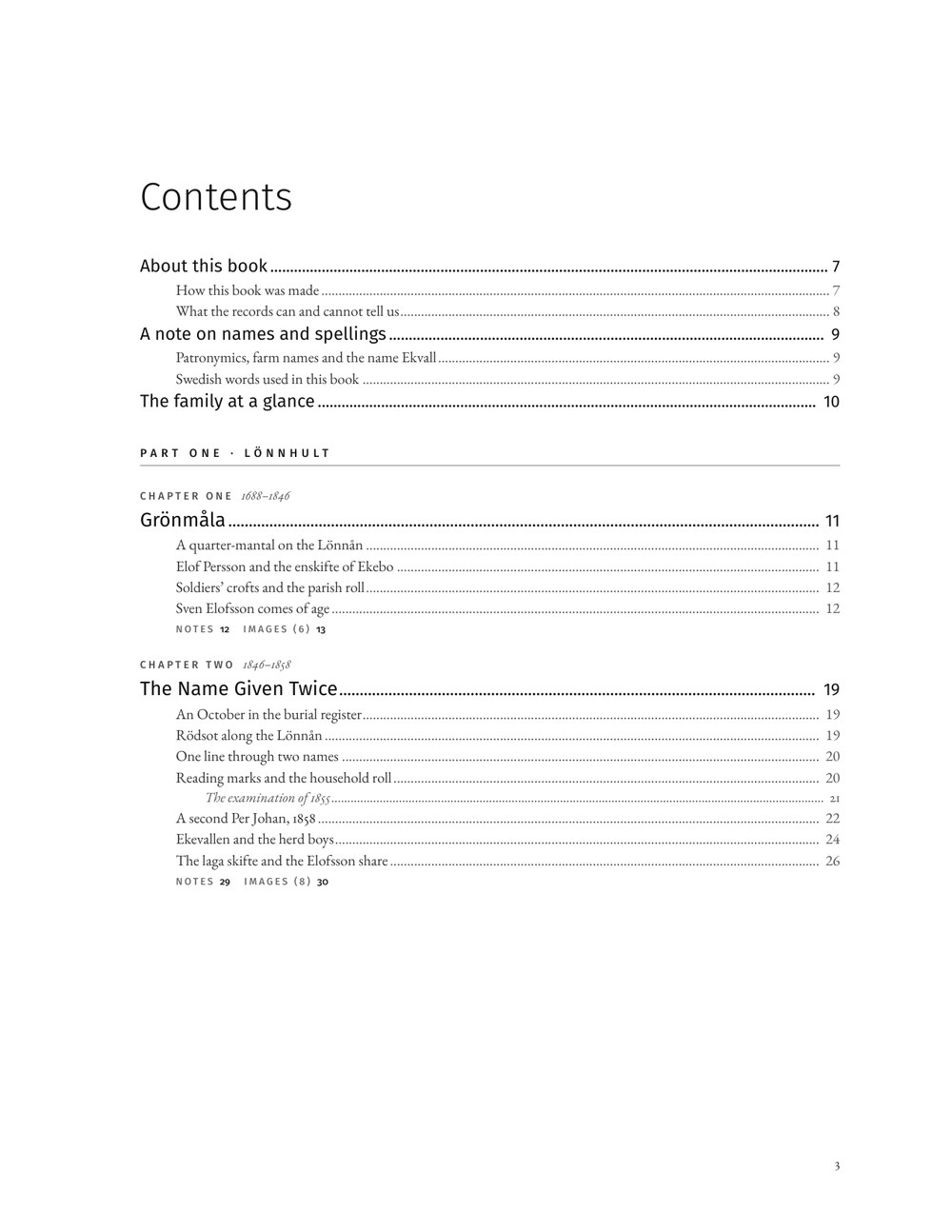
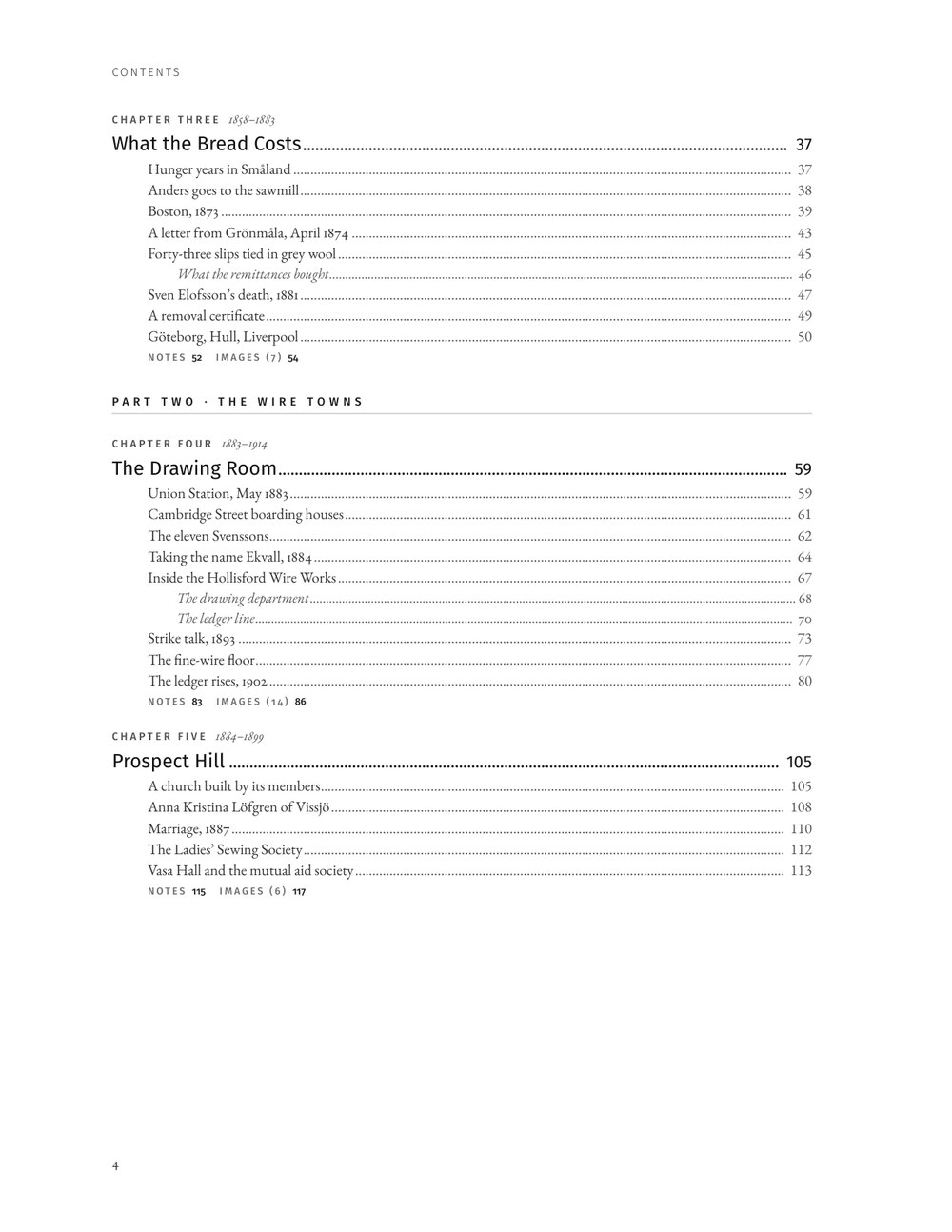
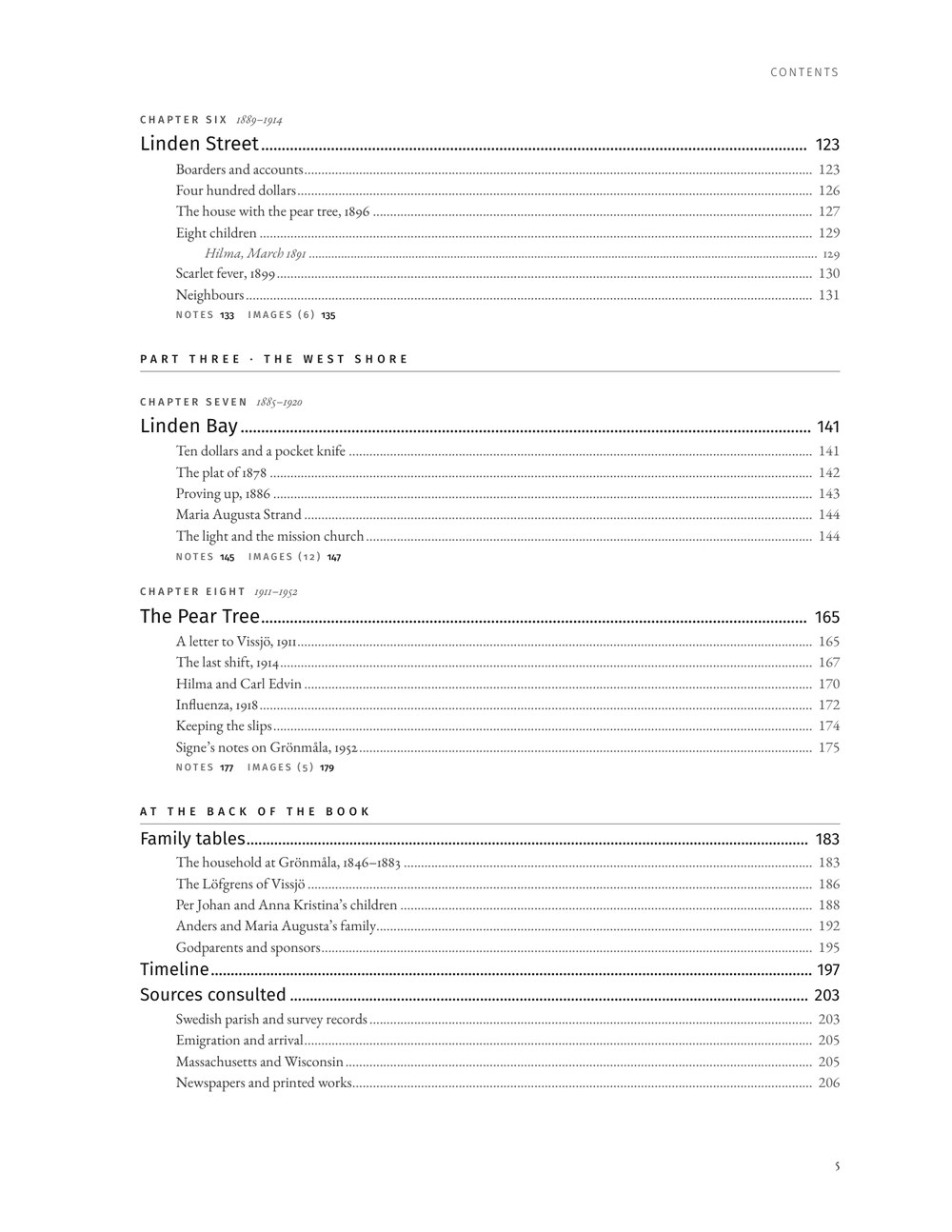
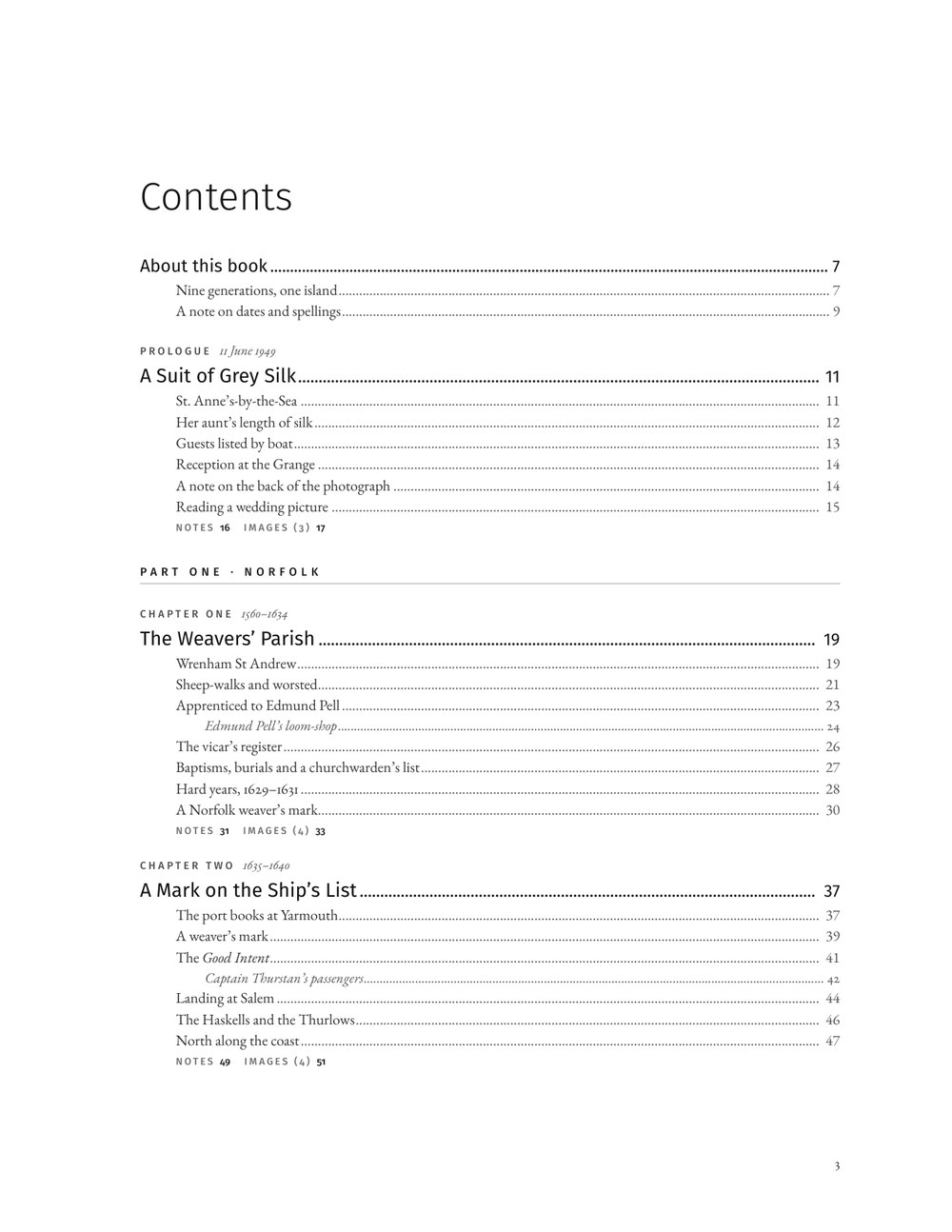
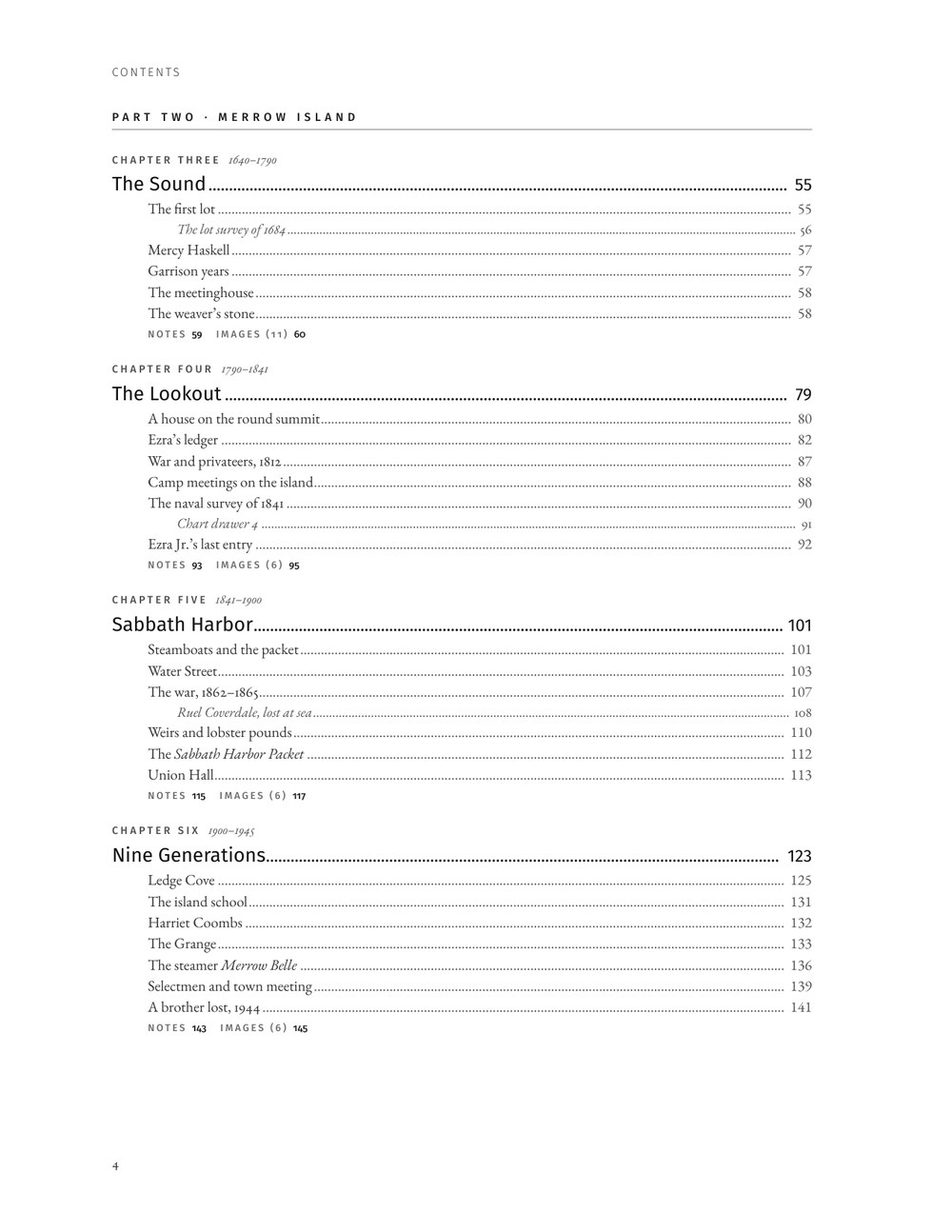
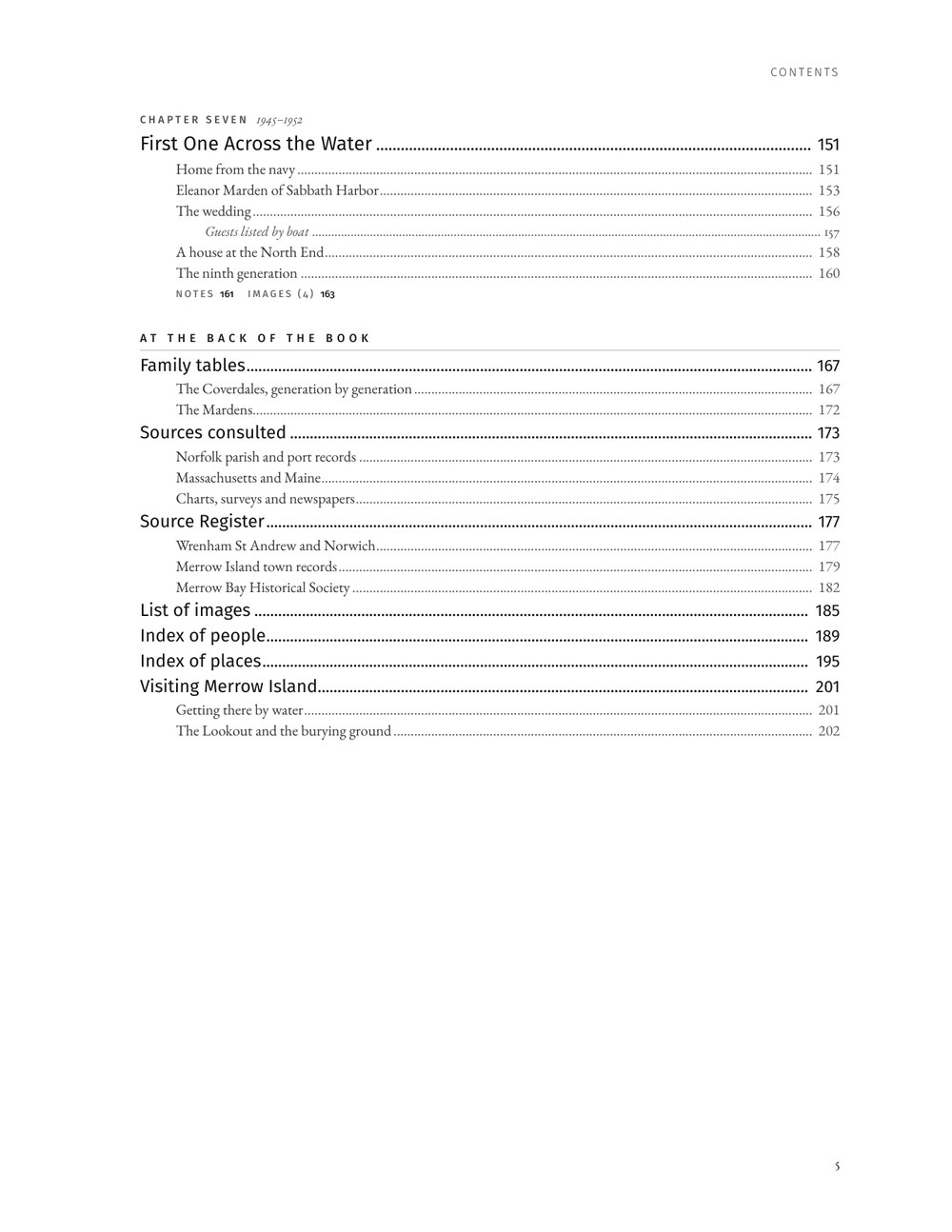
The Coverdales · three pages of contents
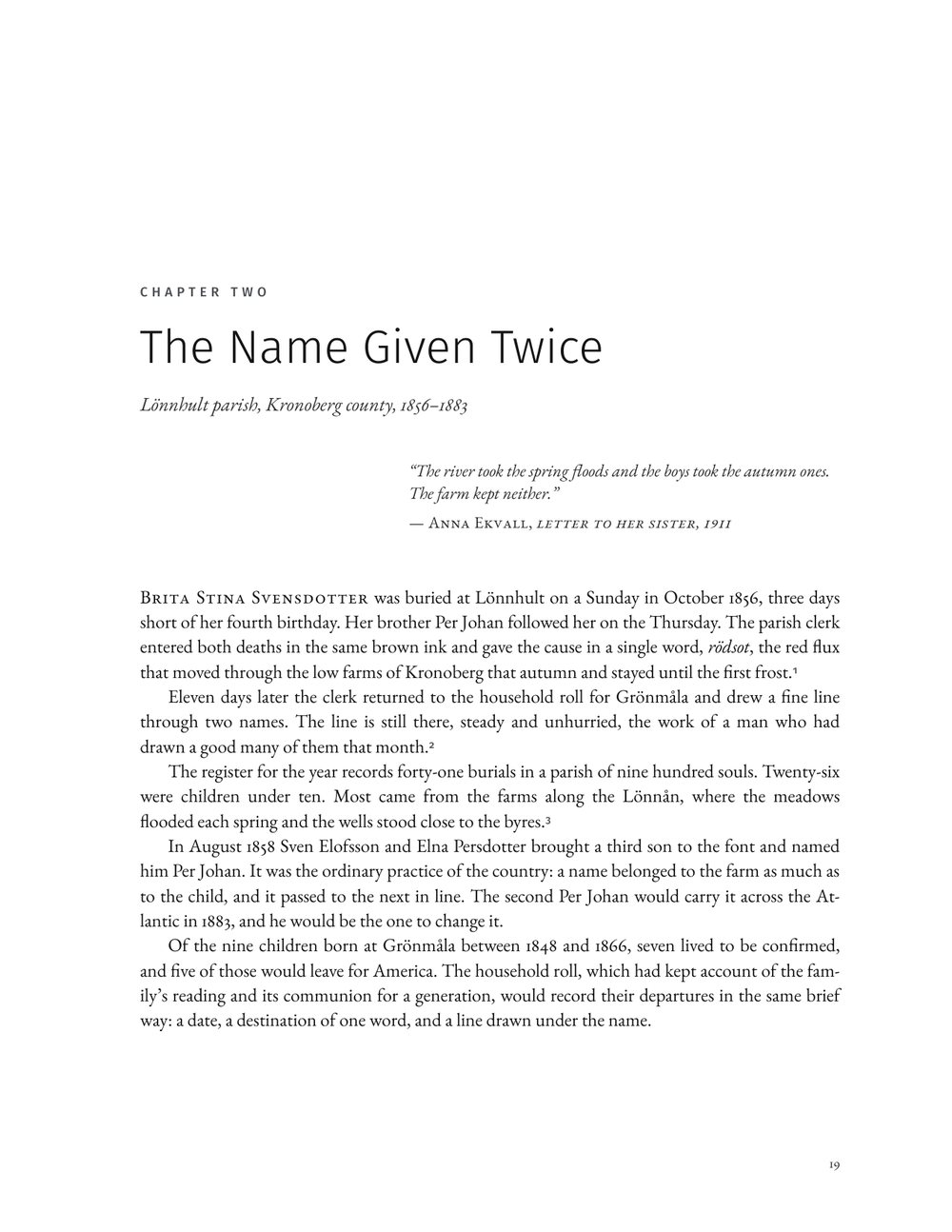
A spread from Chapter Two
Every statement rests on a record, and every record is numbered in the notes.
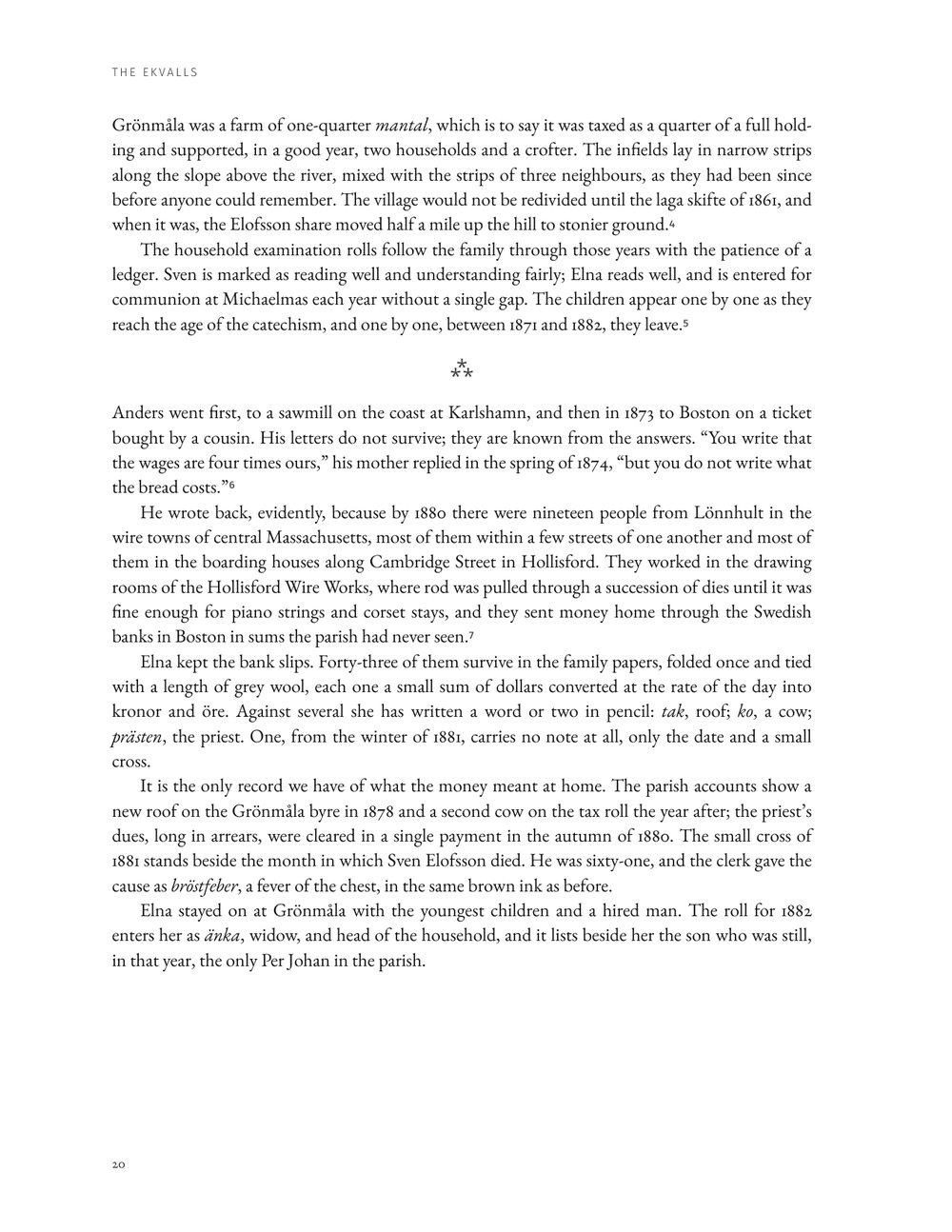
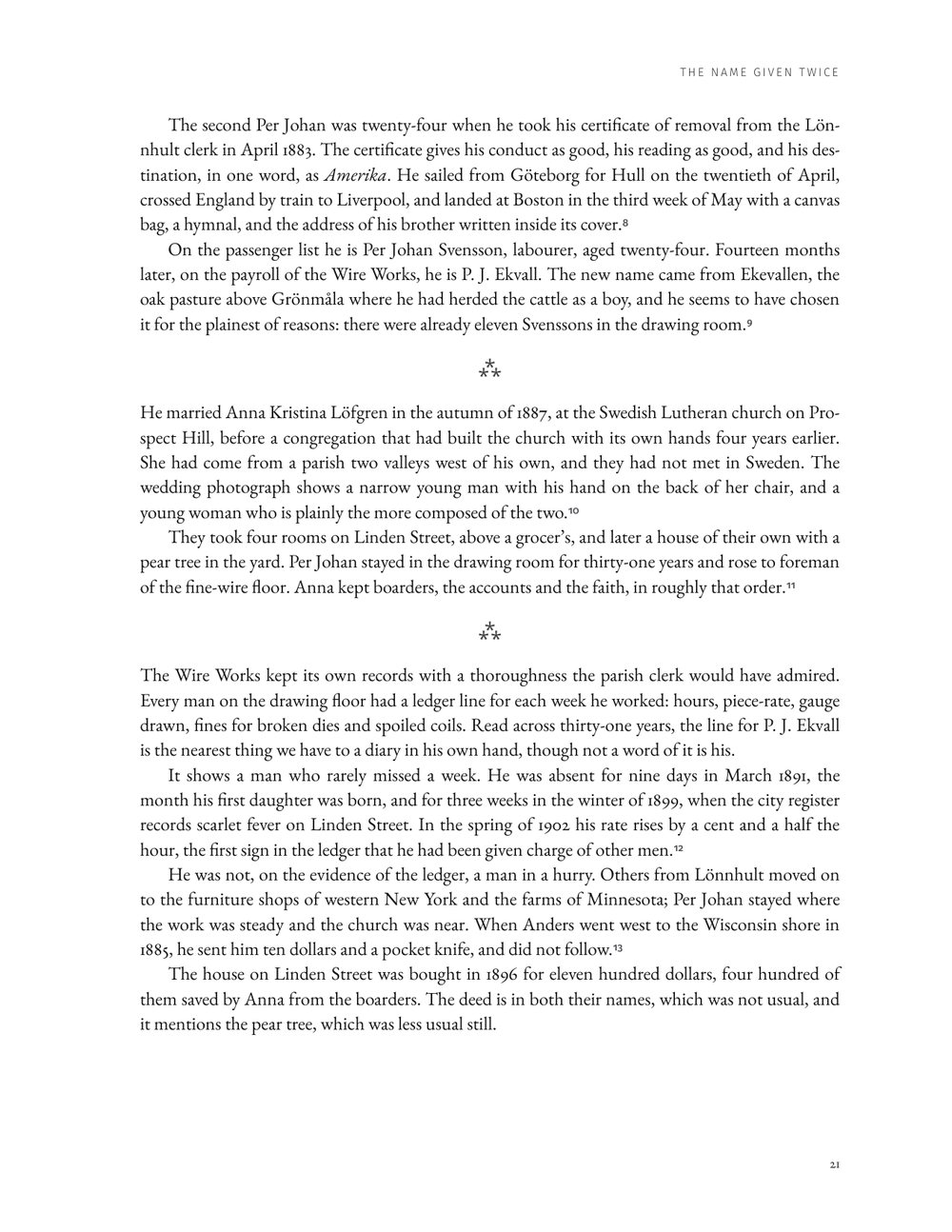
Visiting the family’s places
Every book carries a Traveler’s Companion, a guide for the family who wants to stand where their people stood. It says plainly what survives, the building itself, only the site, or no more than the parish, and gives the walk, who holds the key, and which archive to ask for.
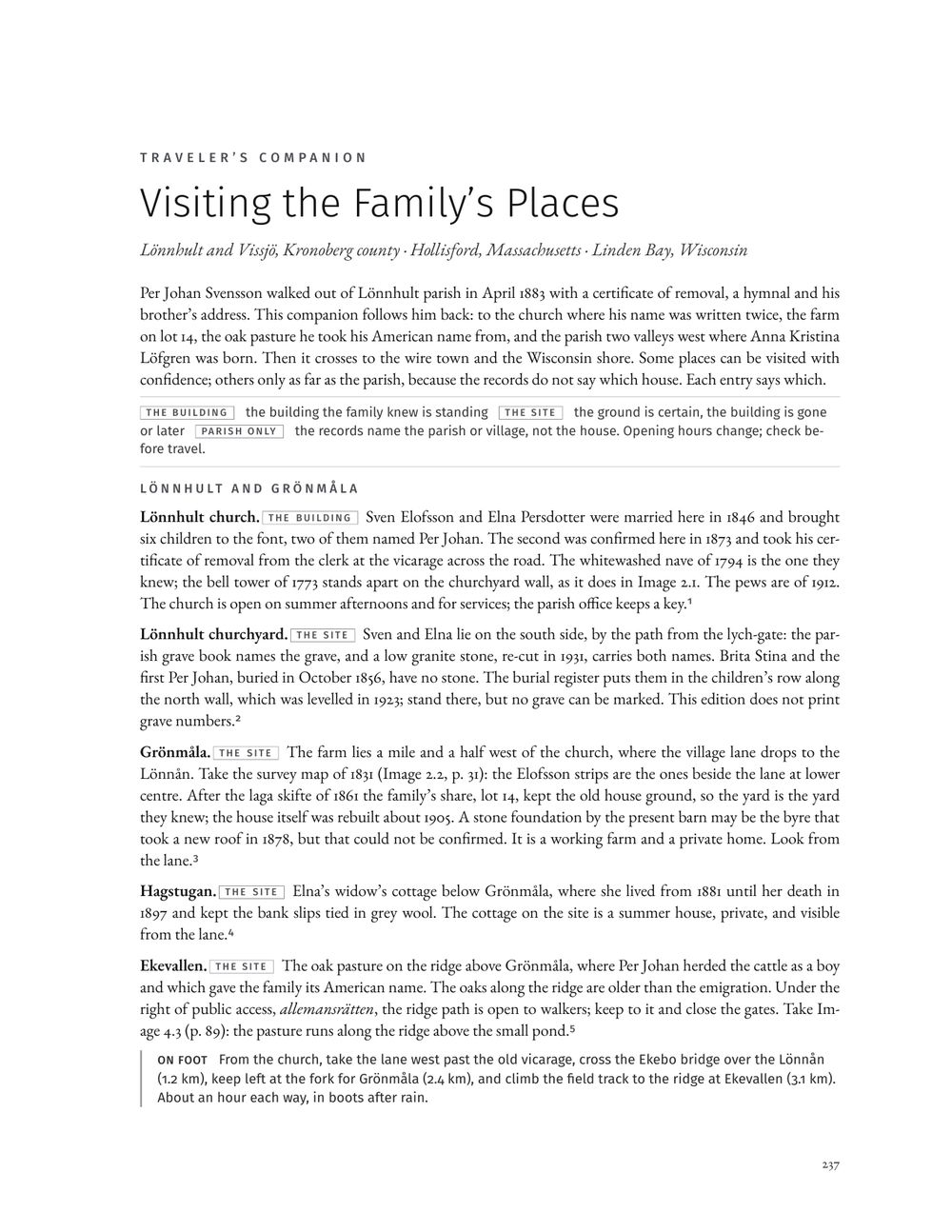
Notes, sources, and an opening
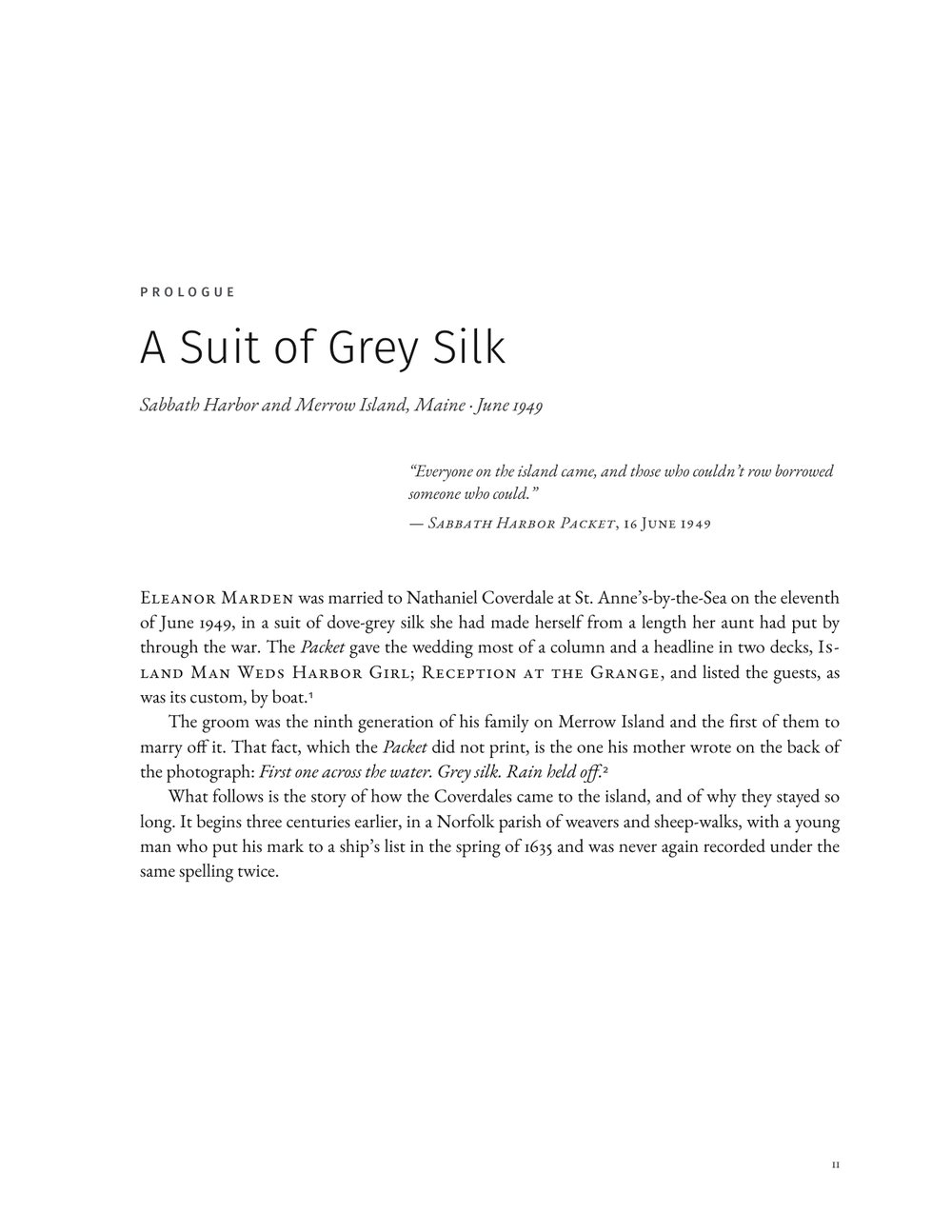
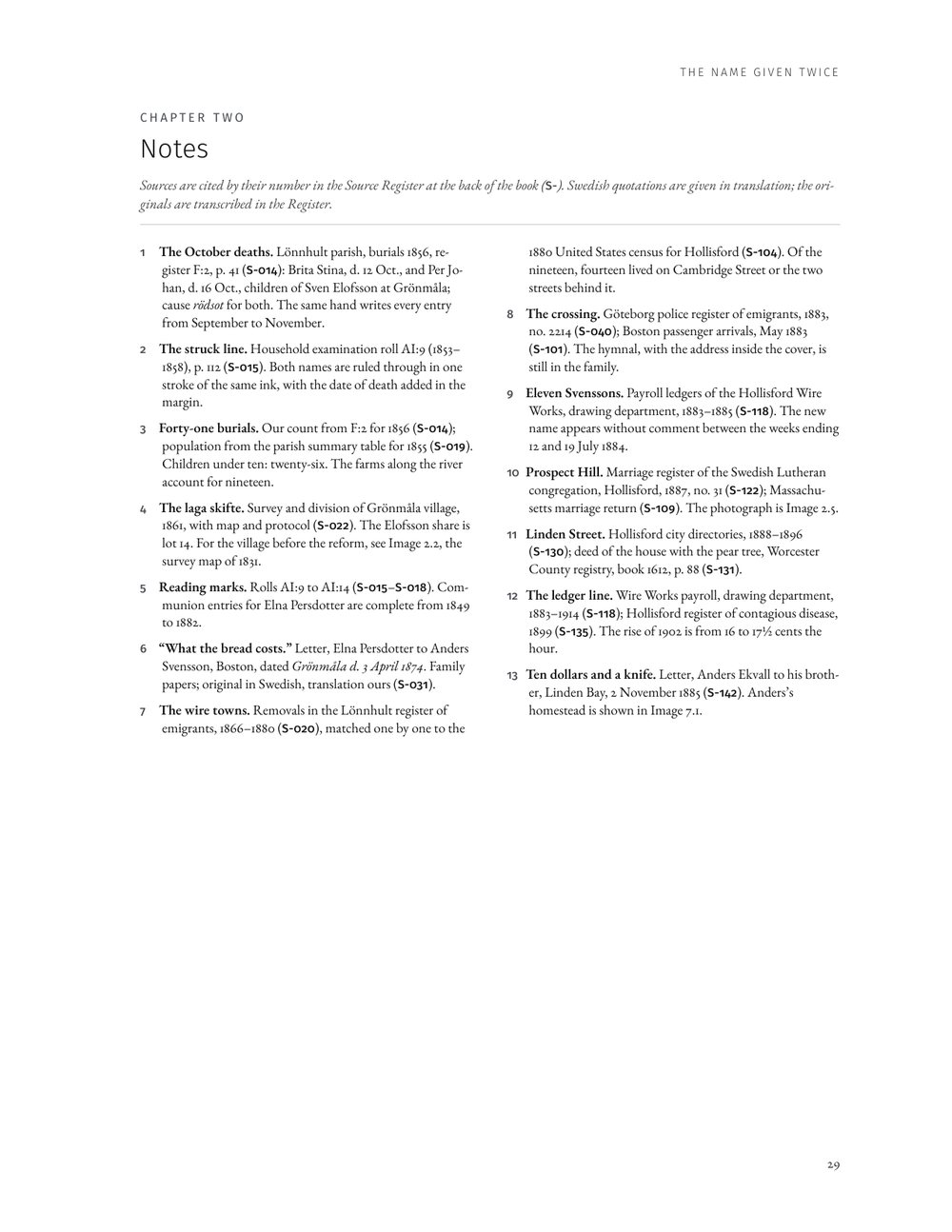
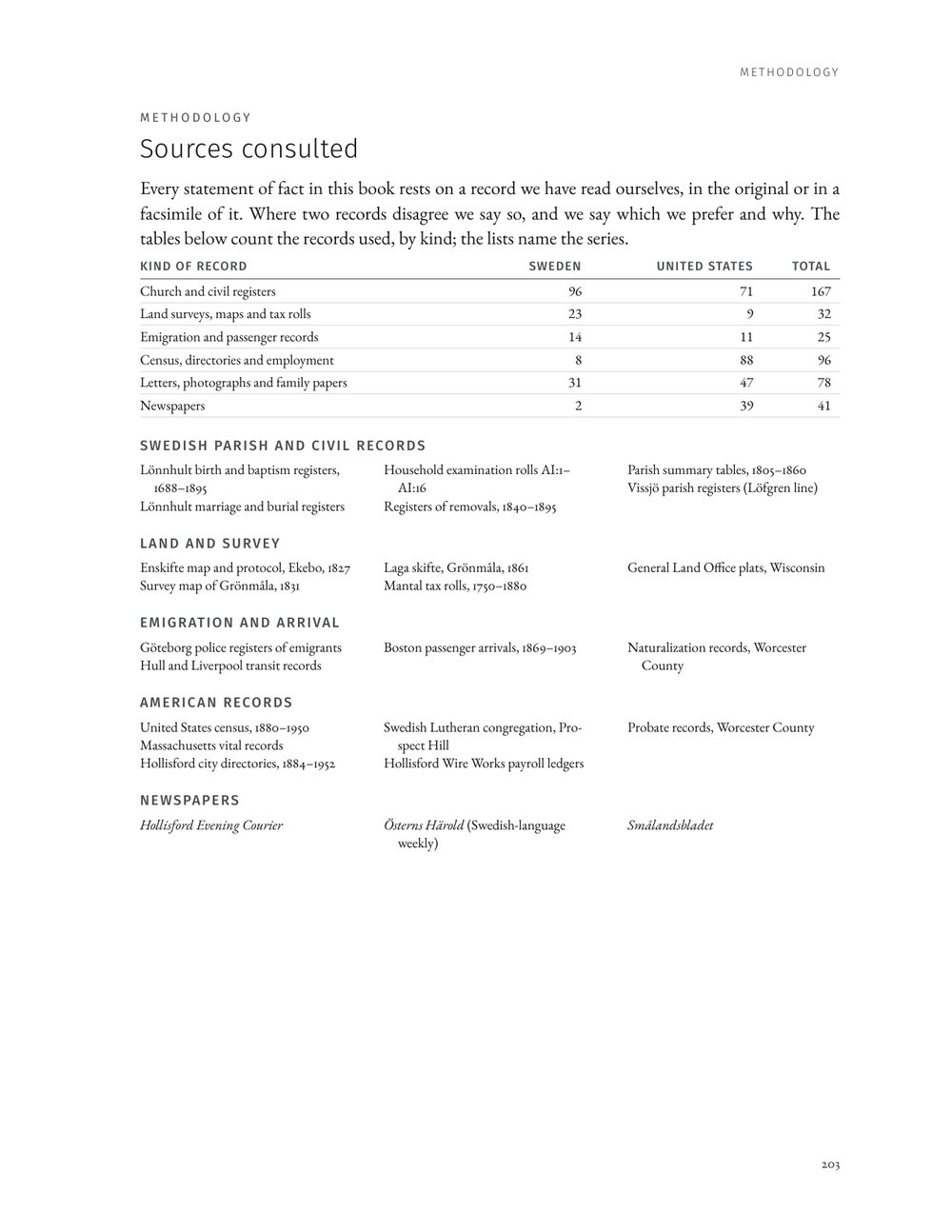
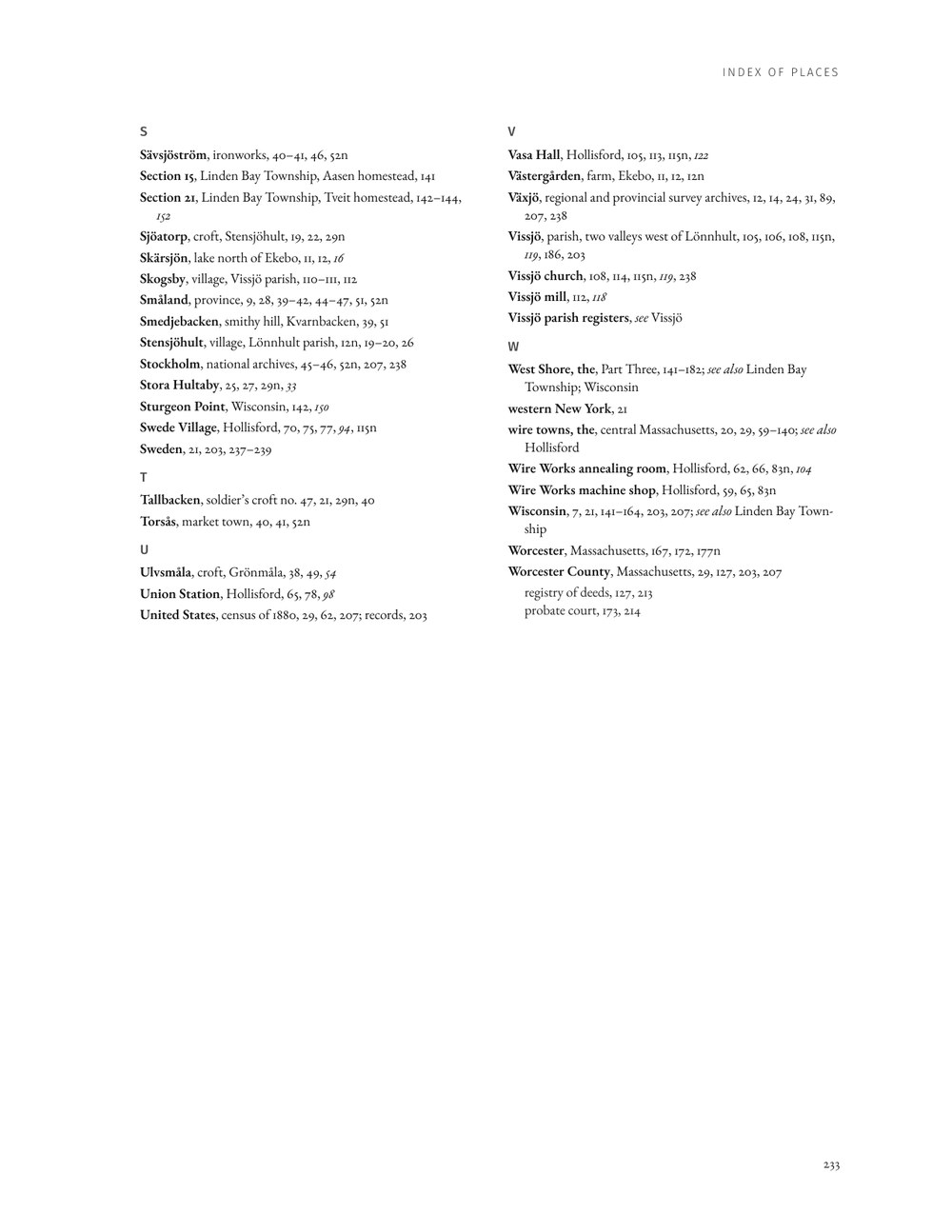
Every source numbered, every name indexed
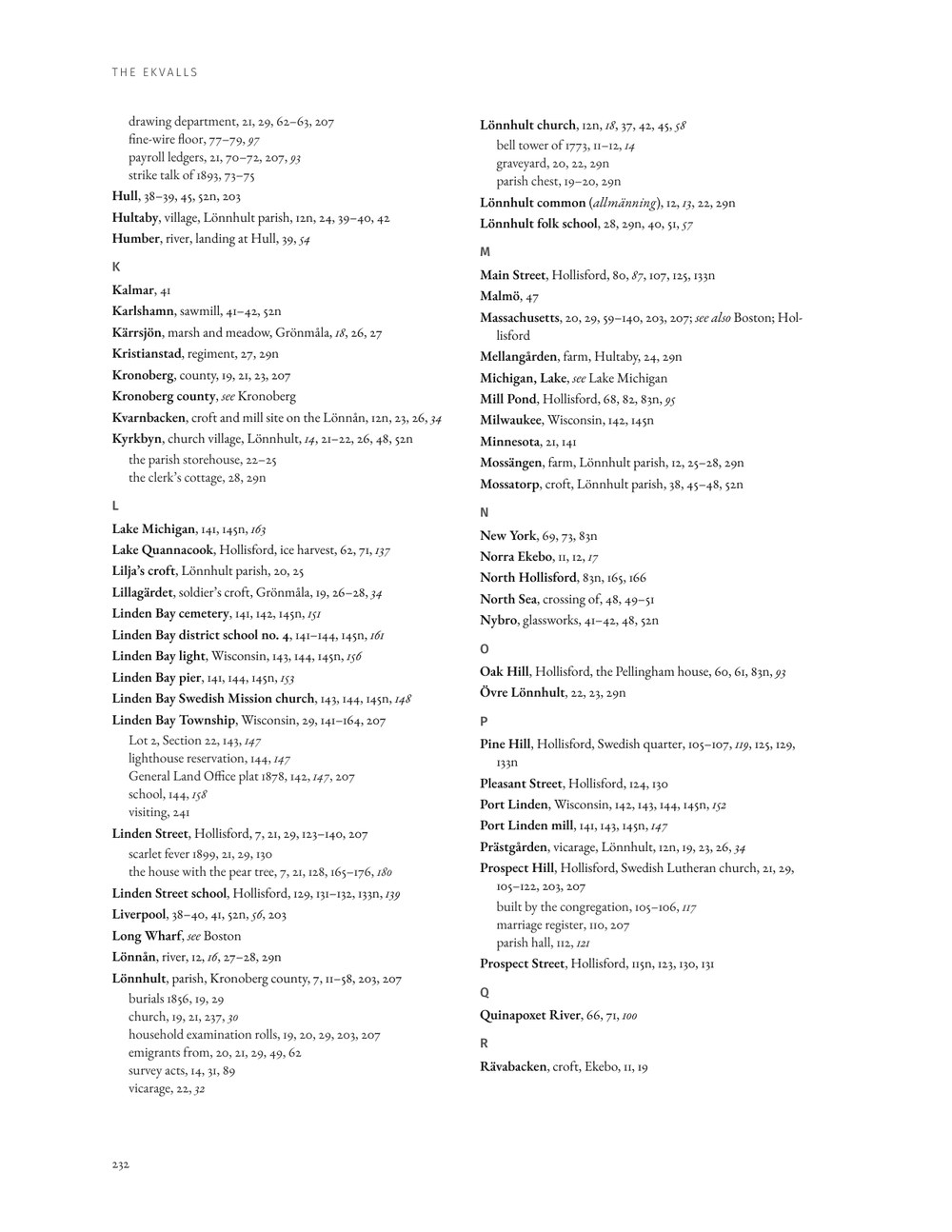
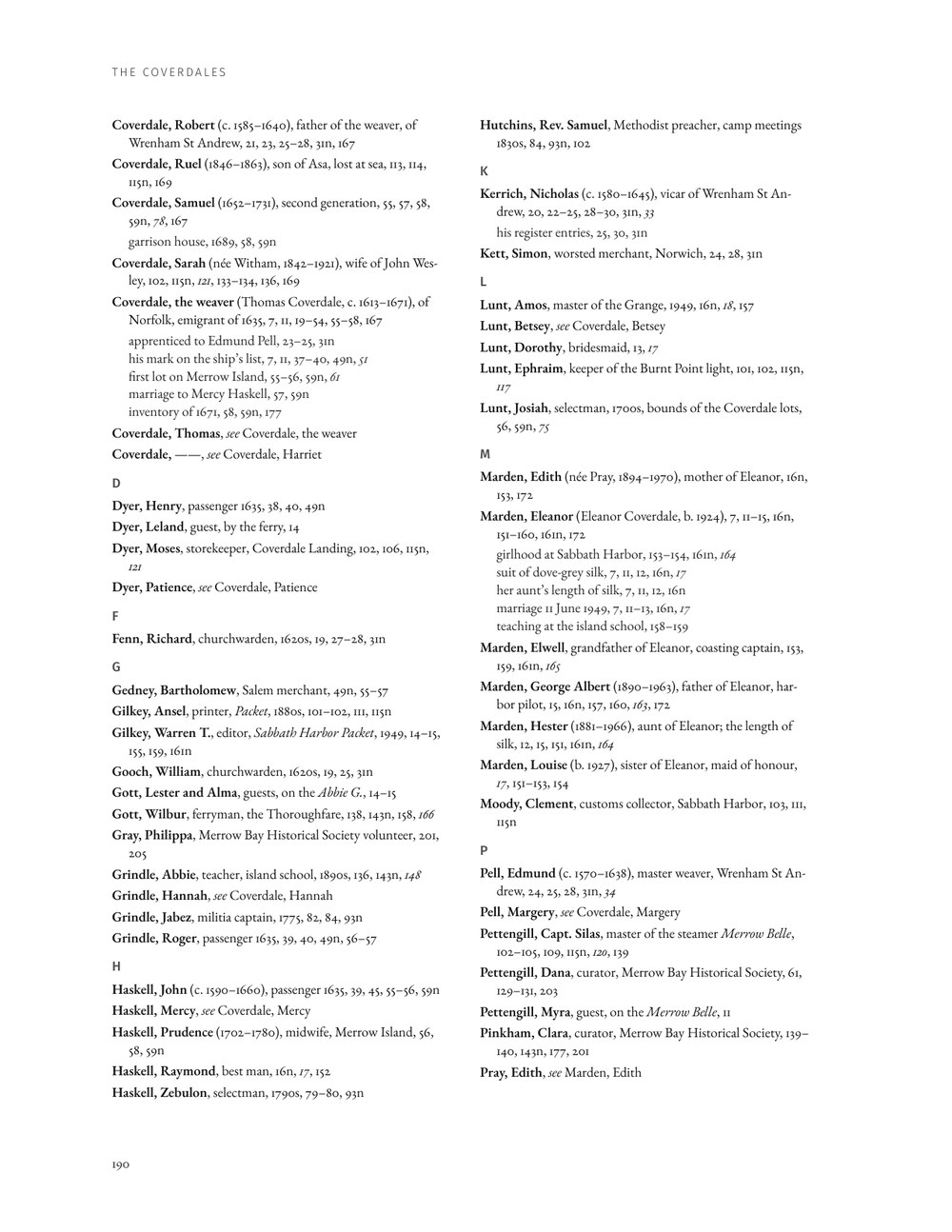
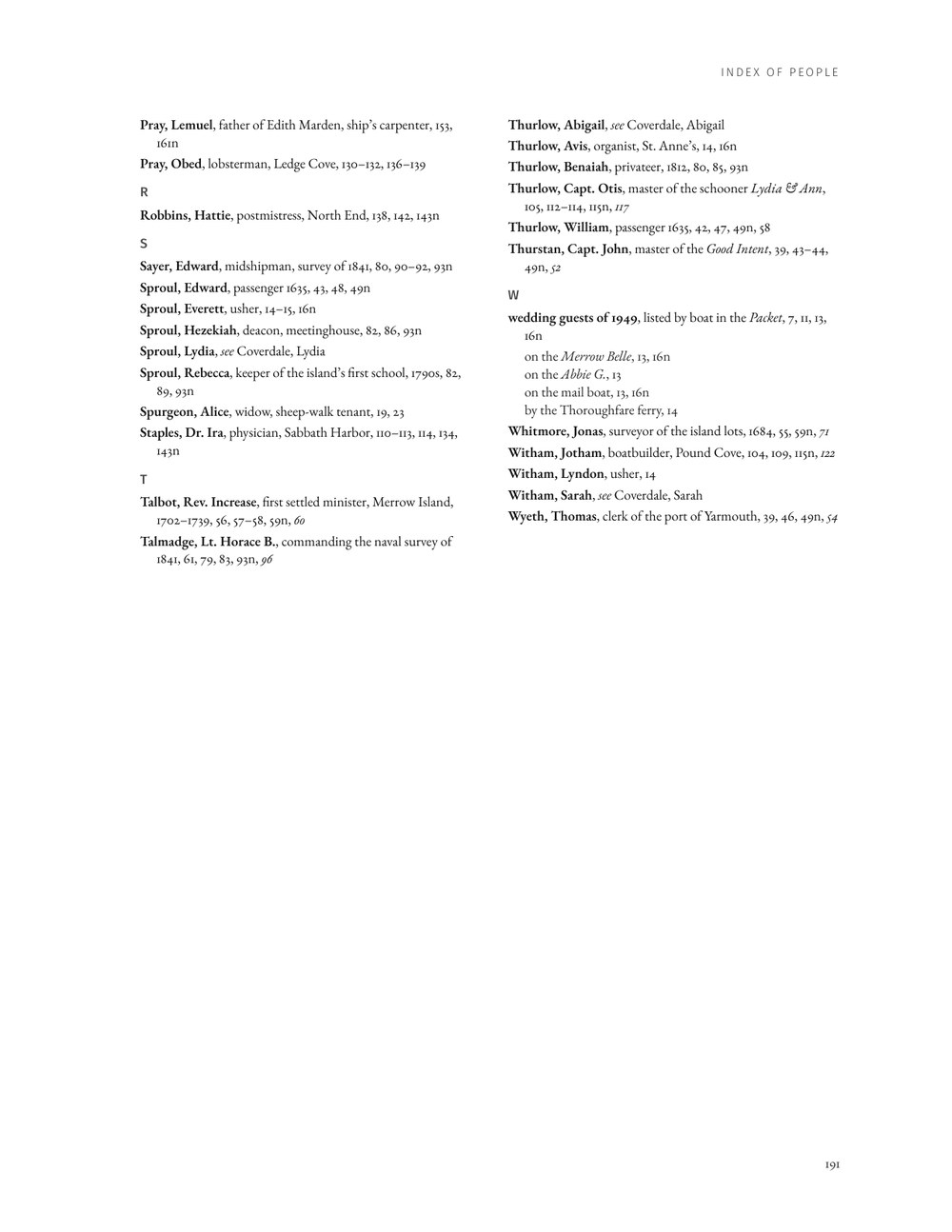
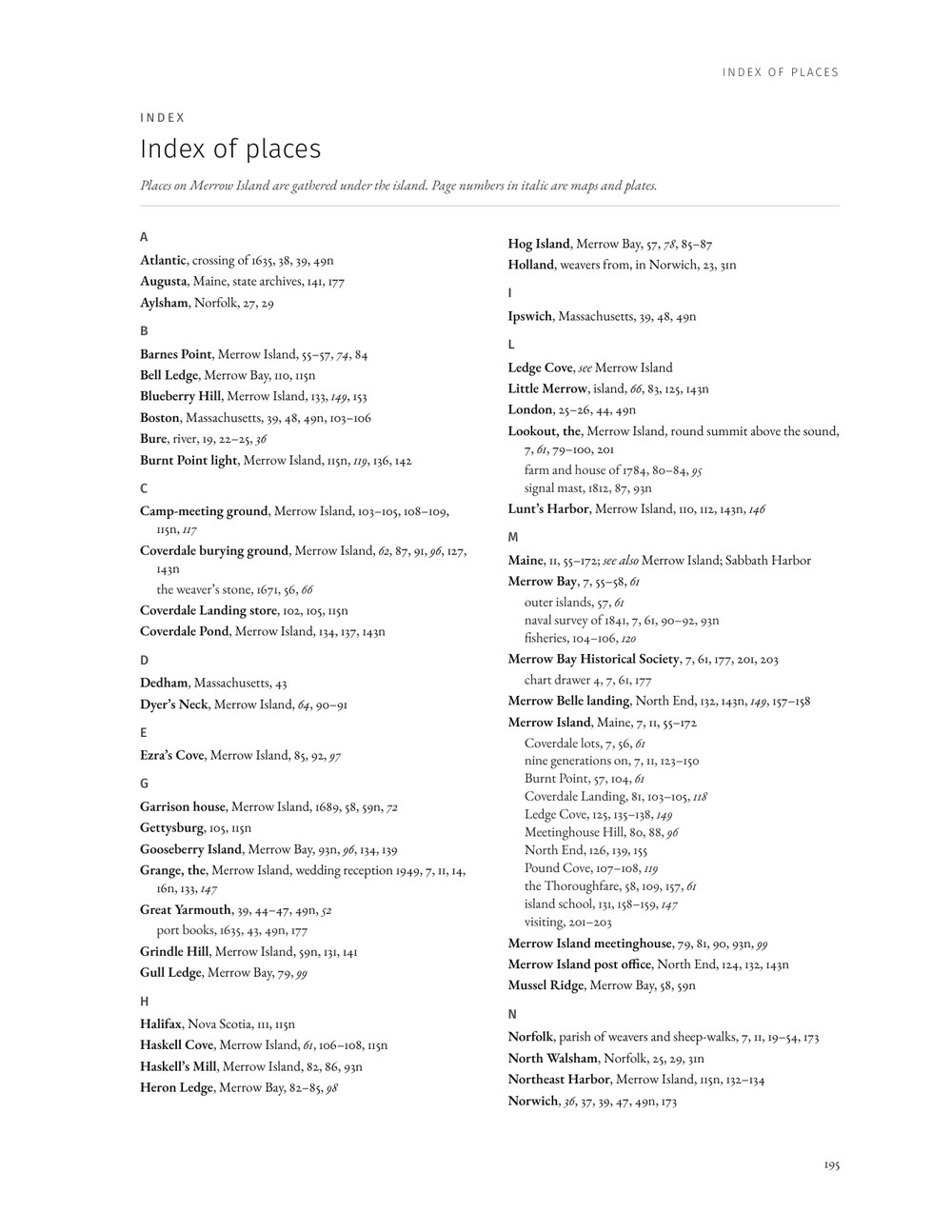
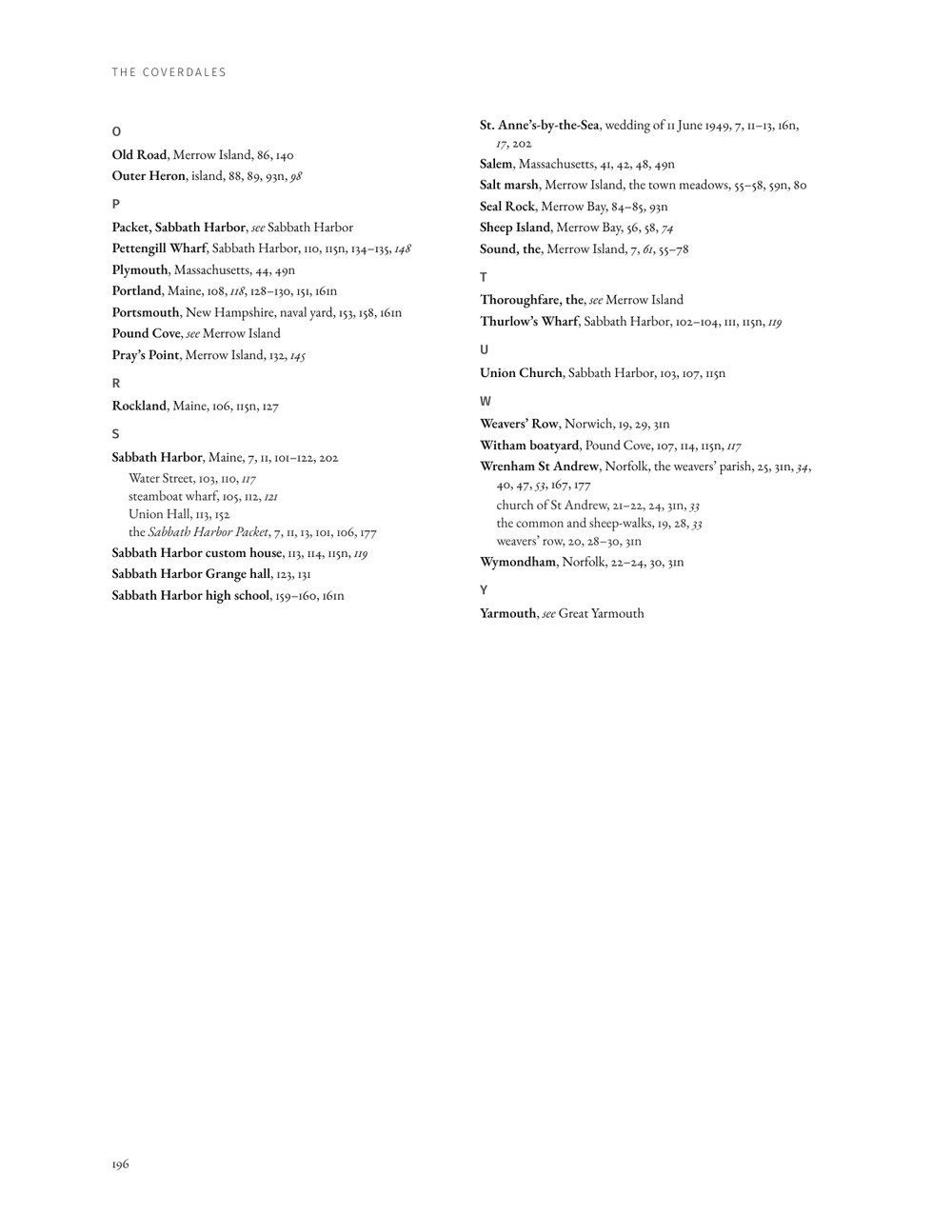
Every person and every place, with each page they appear on, the notes that cite them, and the plates that show them.
The Ekvalls · index of people
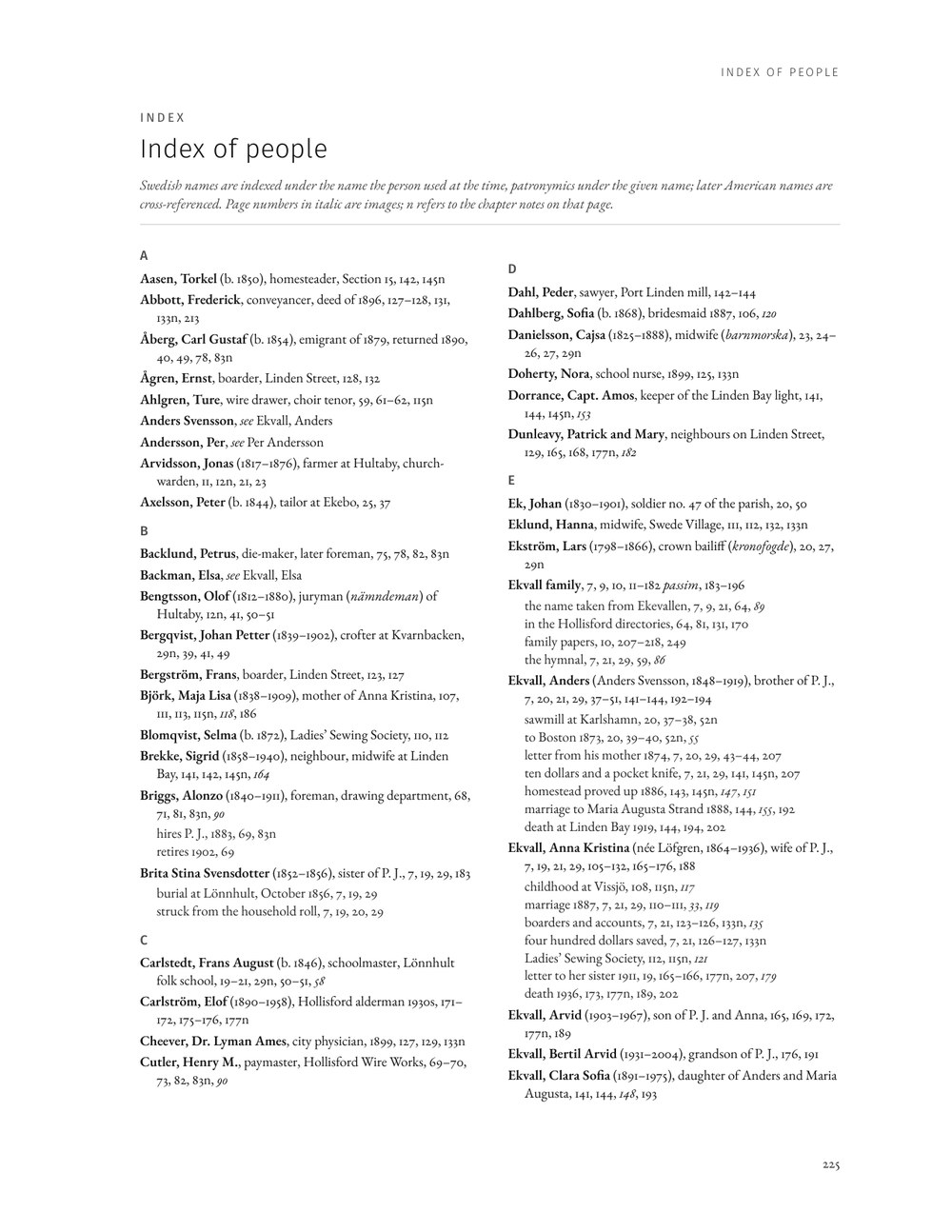
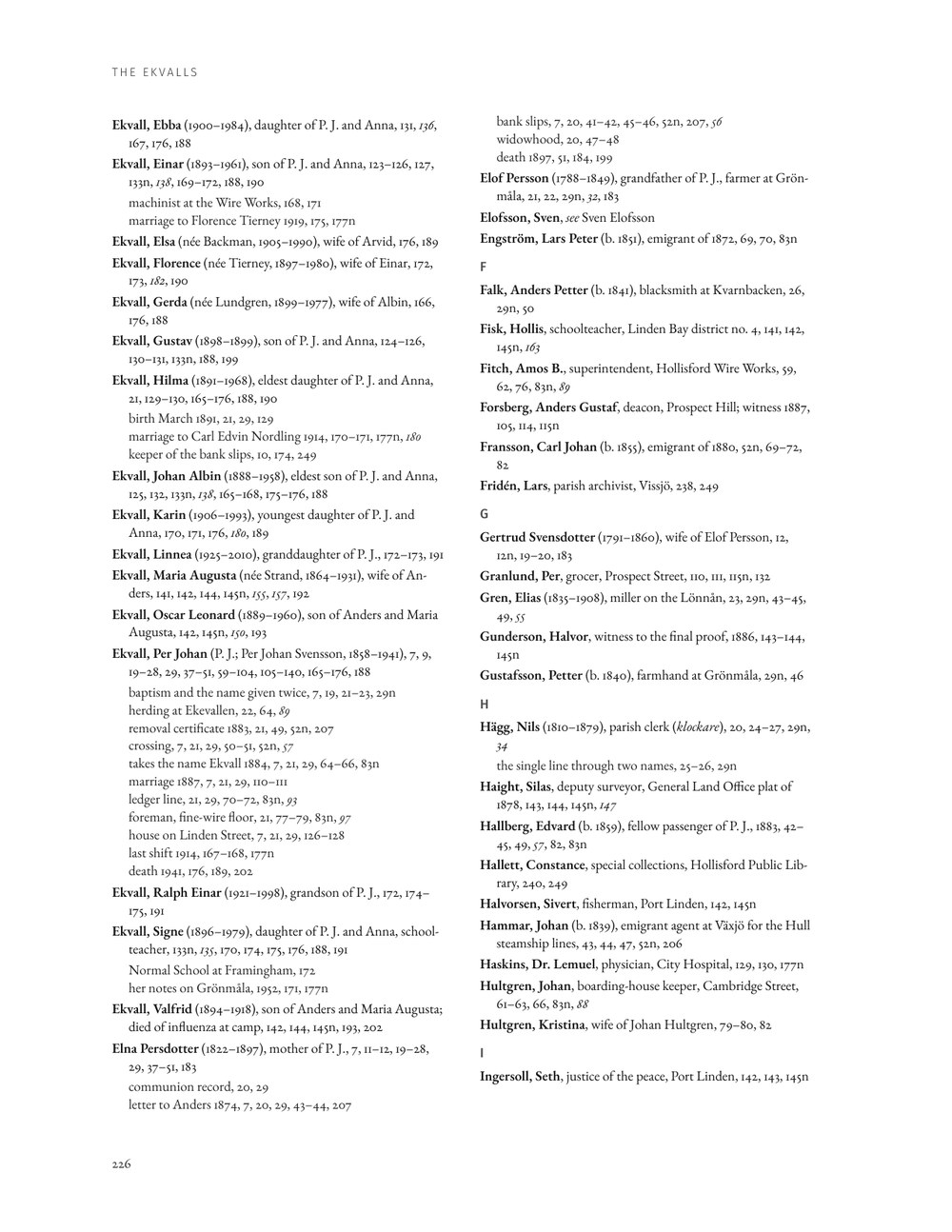
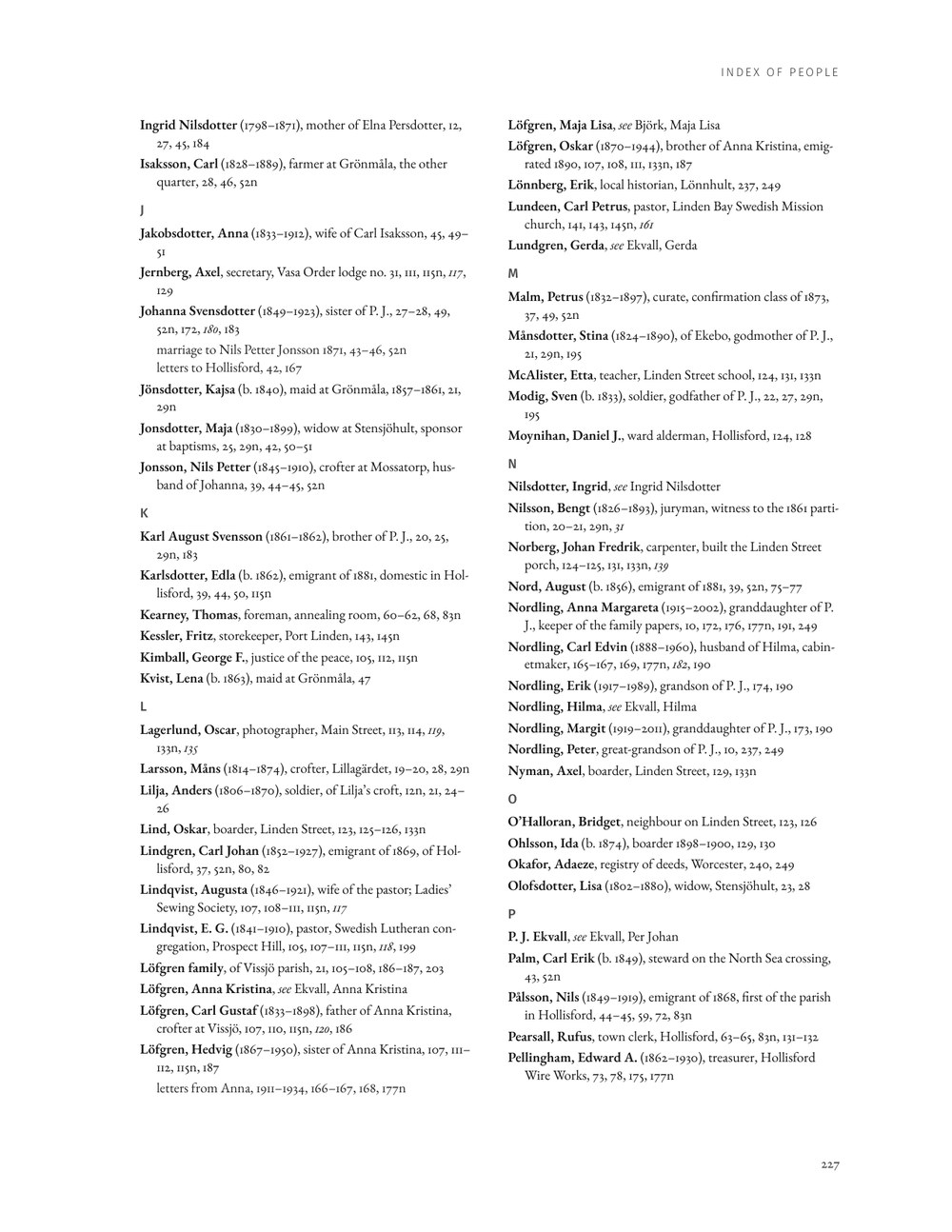
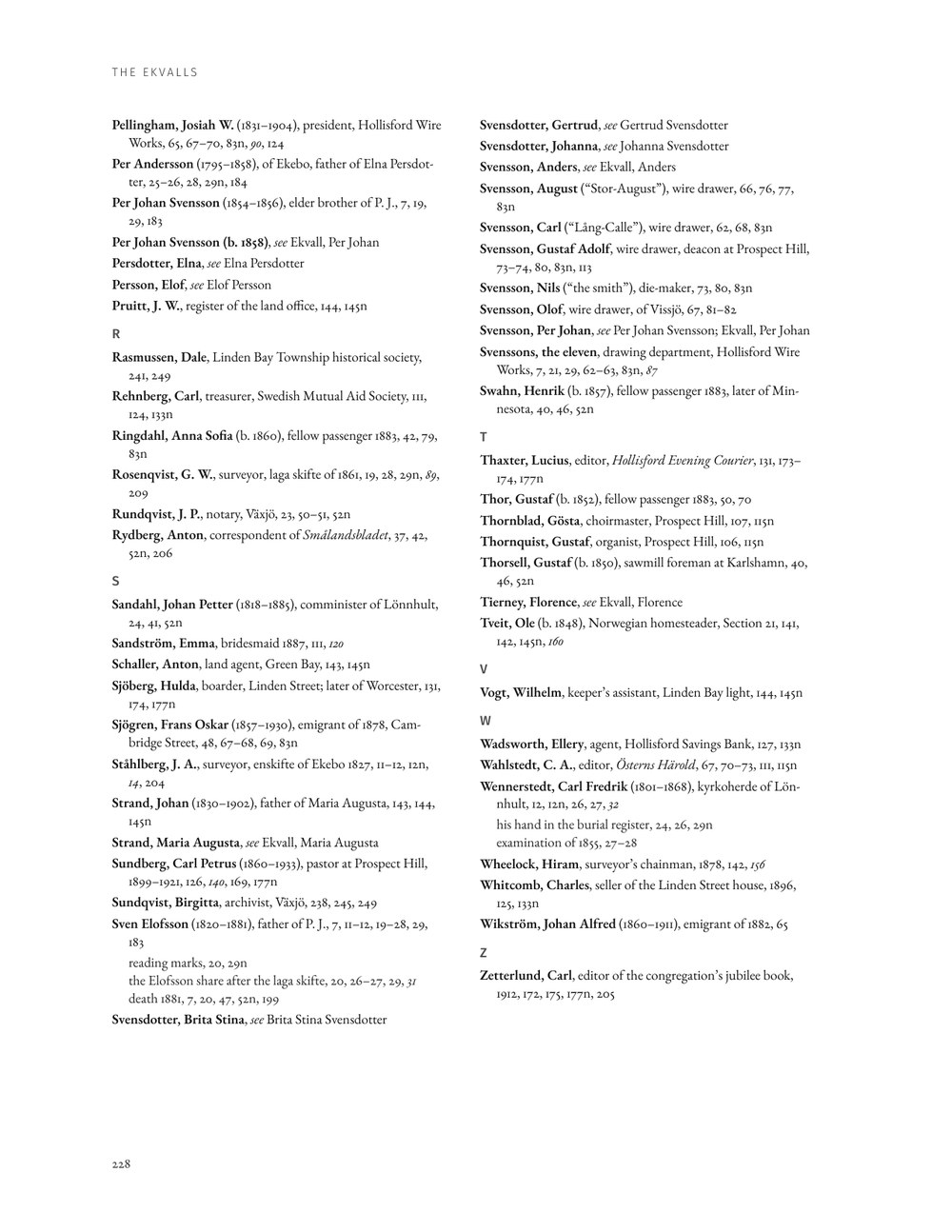
The Ekvalls · index of places and source register
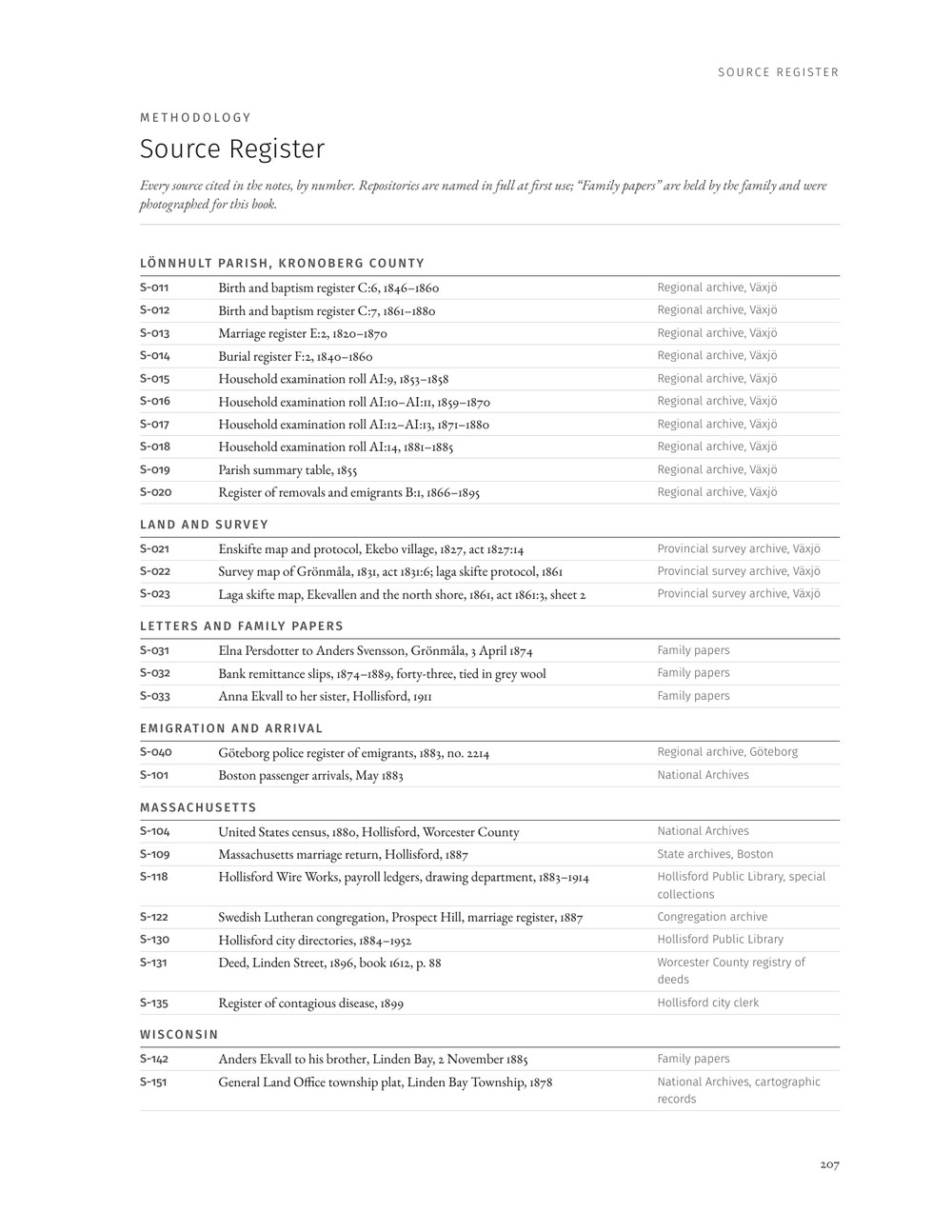
The Coverdales · index of people
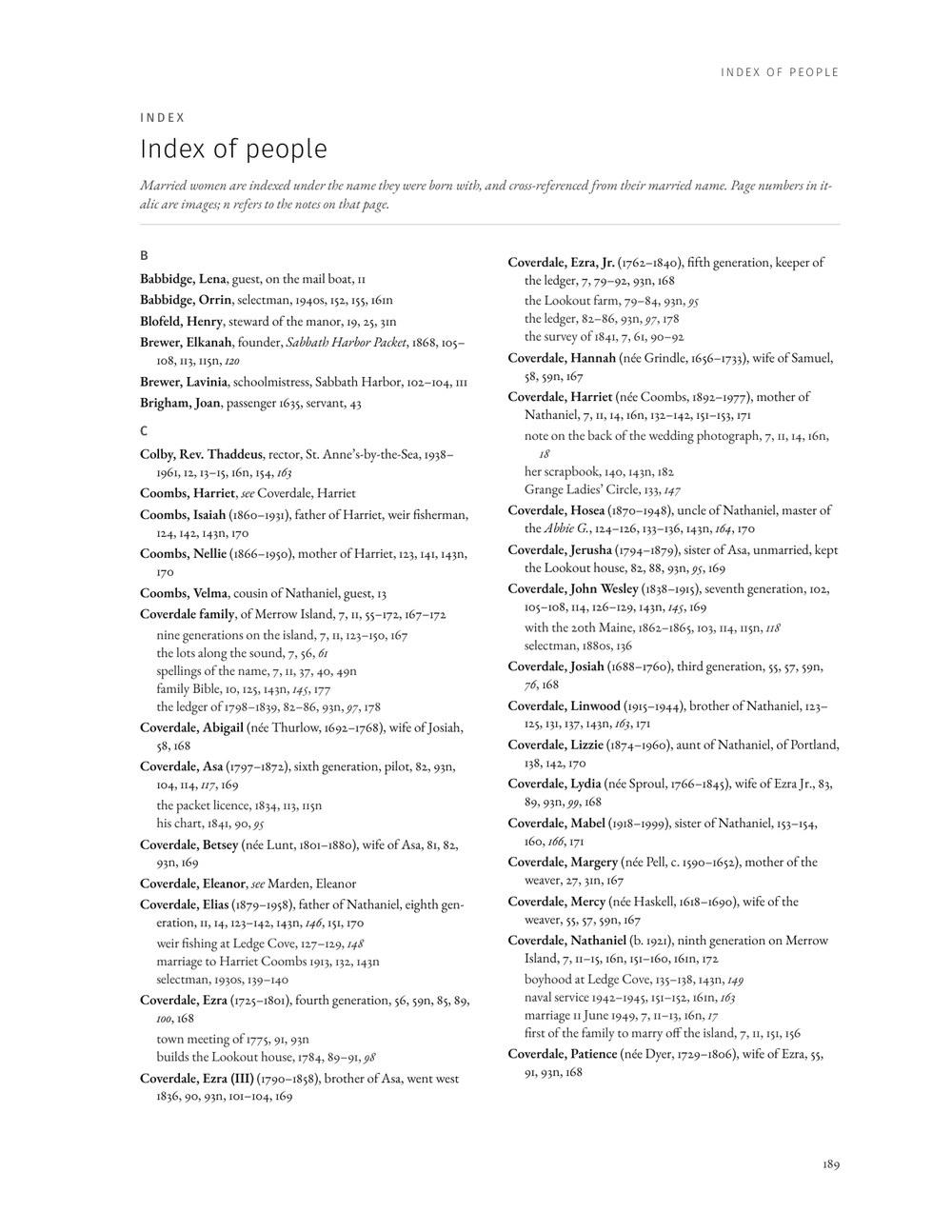
The Coverdales · index of places
The maps, restored and set as plates
Survey maps, township plats and naval charts, restored for the page and captioned from the record.
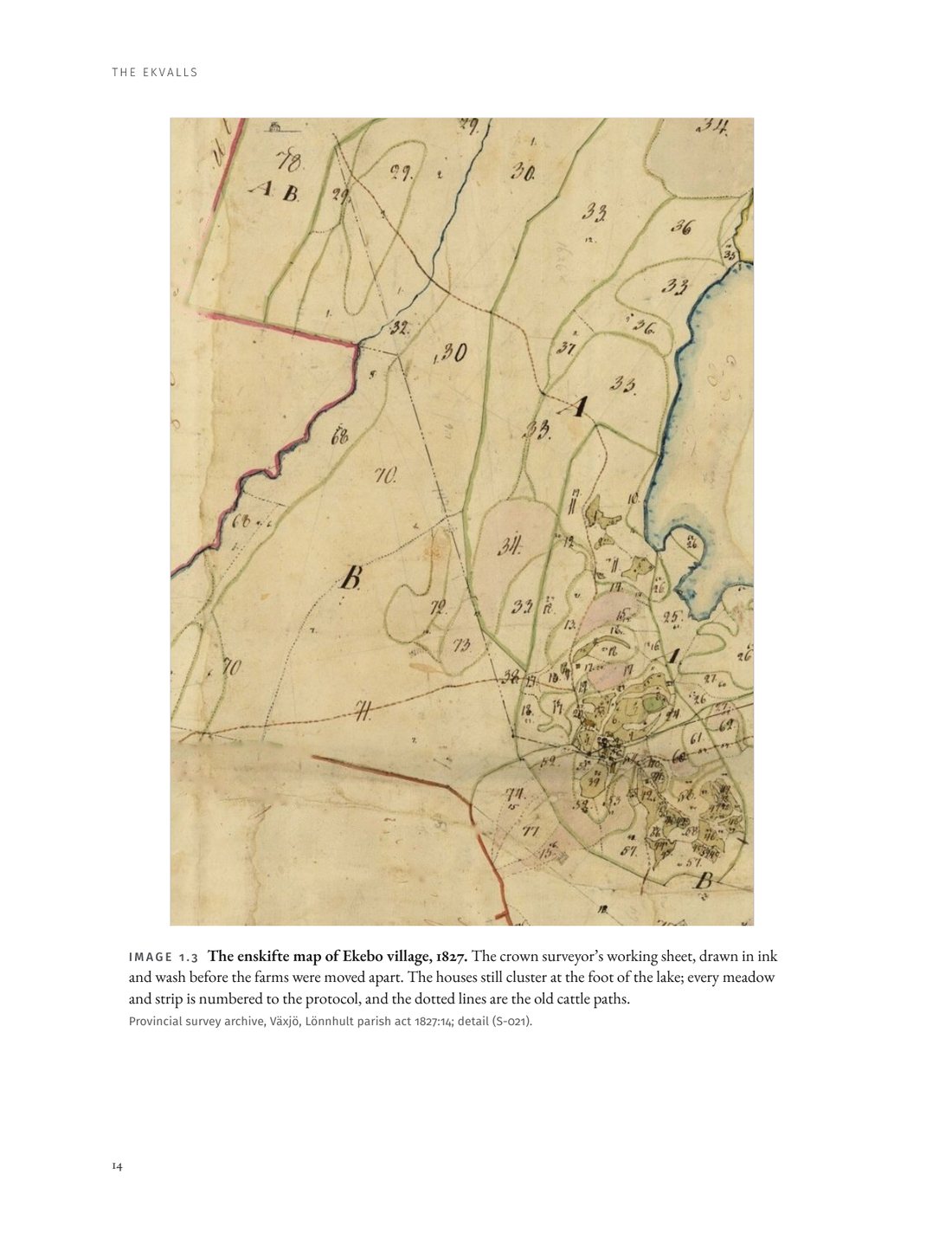
The enskifte map of Ekebo village, 1827.
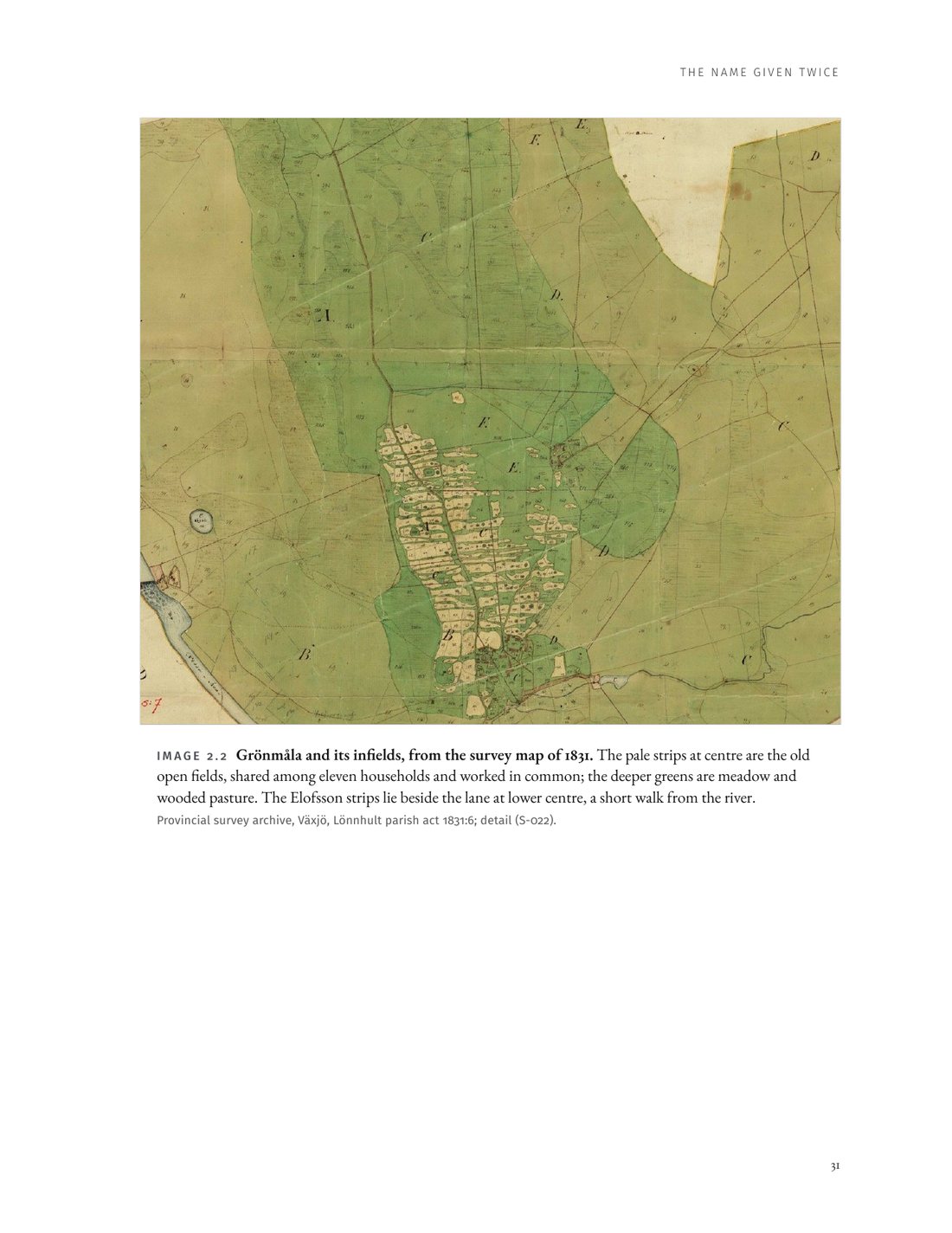
Grönmåla and its infields, from the survey map of 1831.
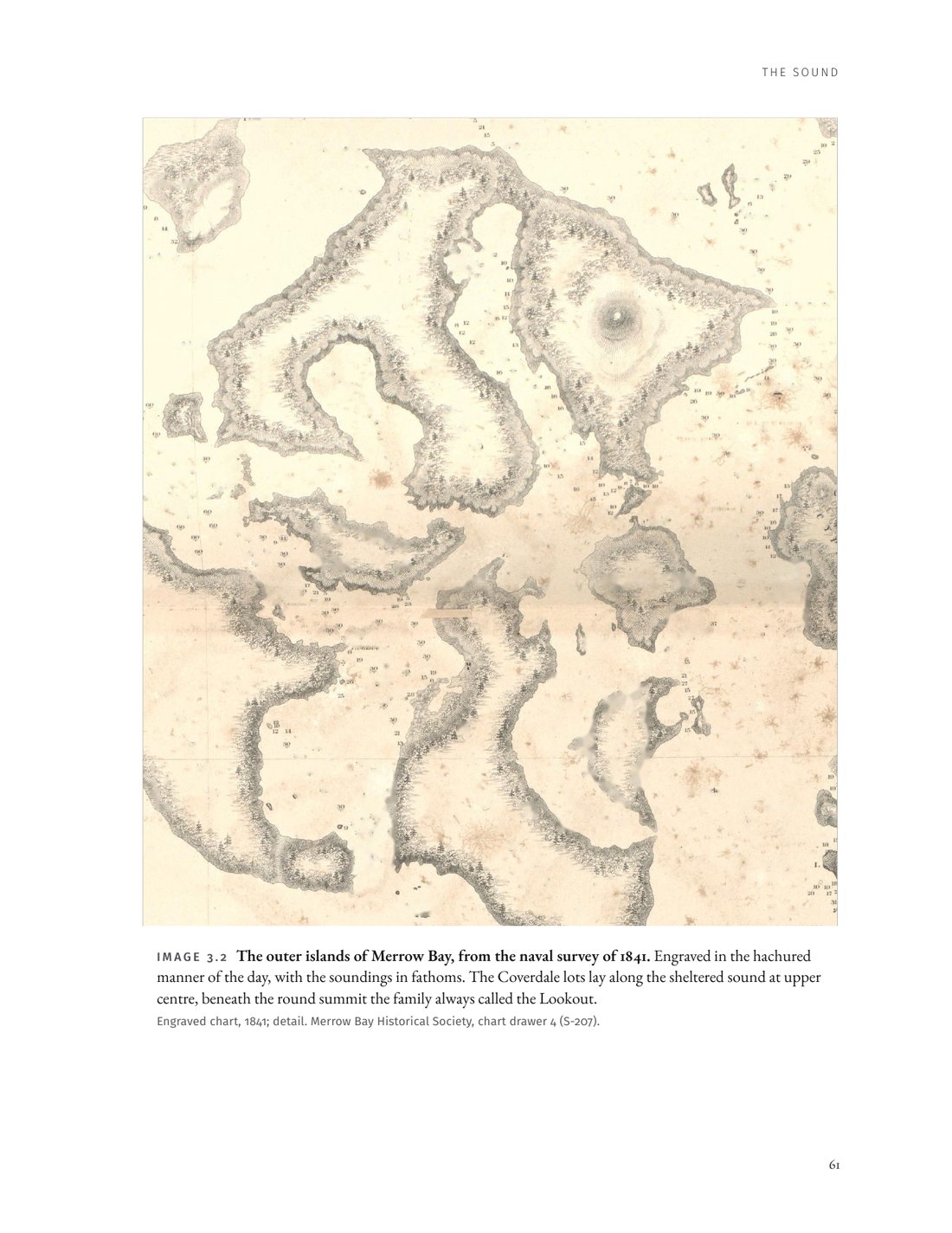
The outer islands of Merrow Bay, from the naval survey of 1841.
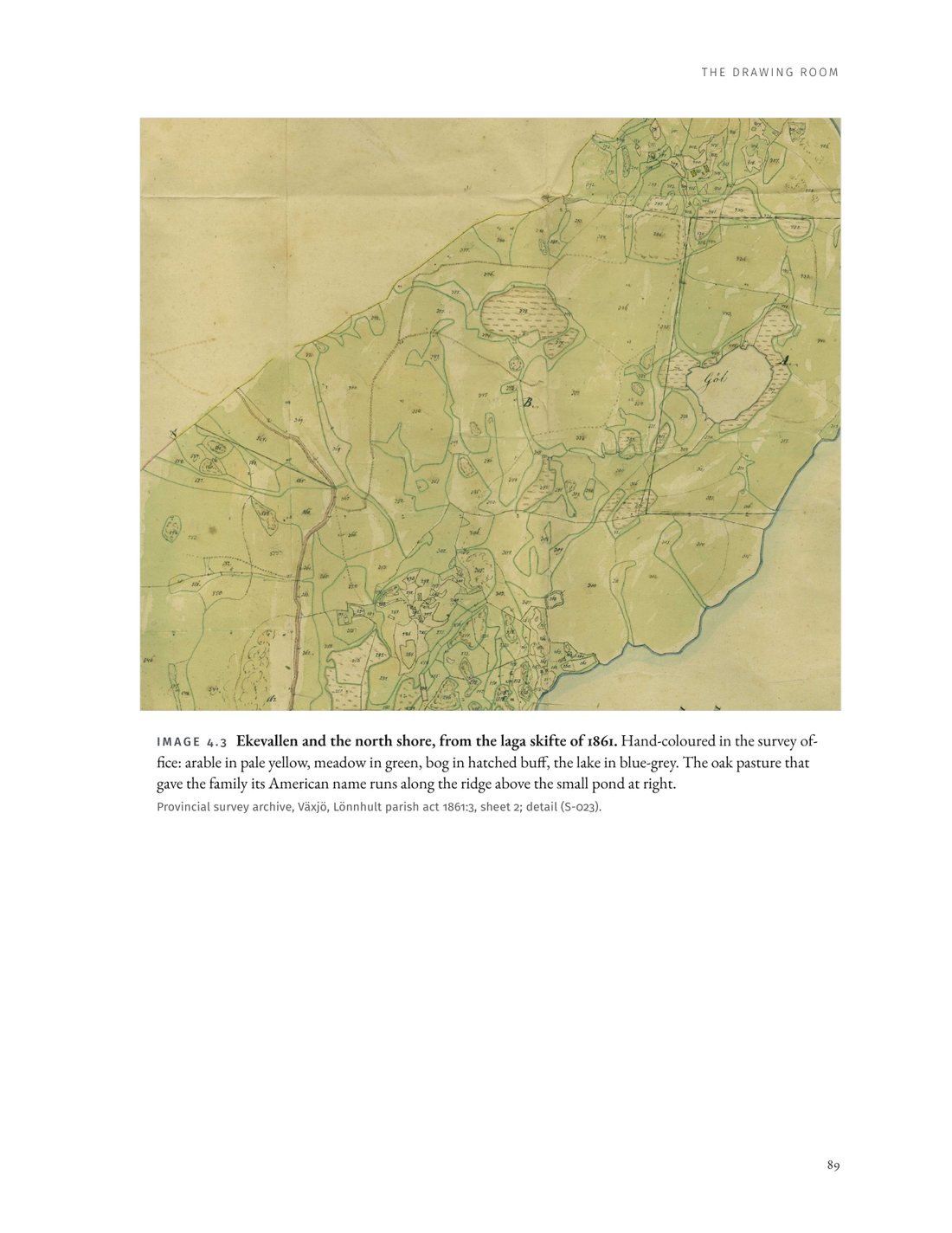
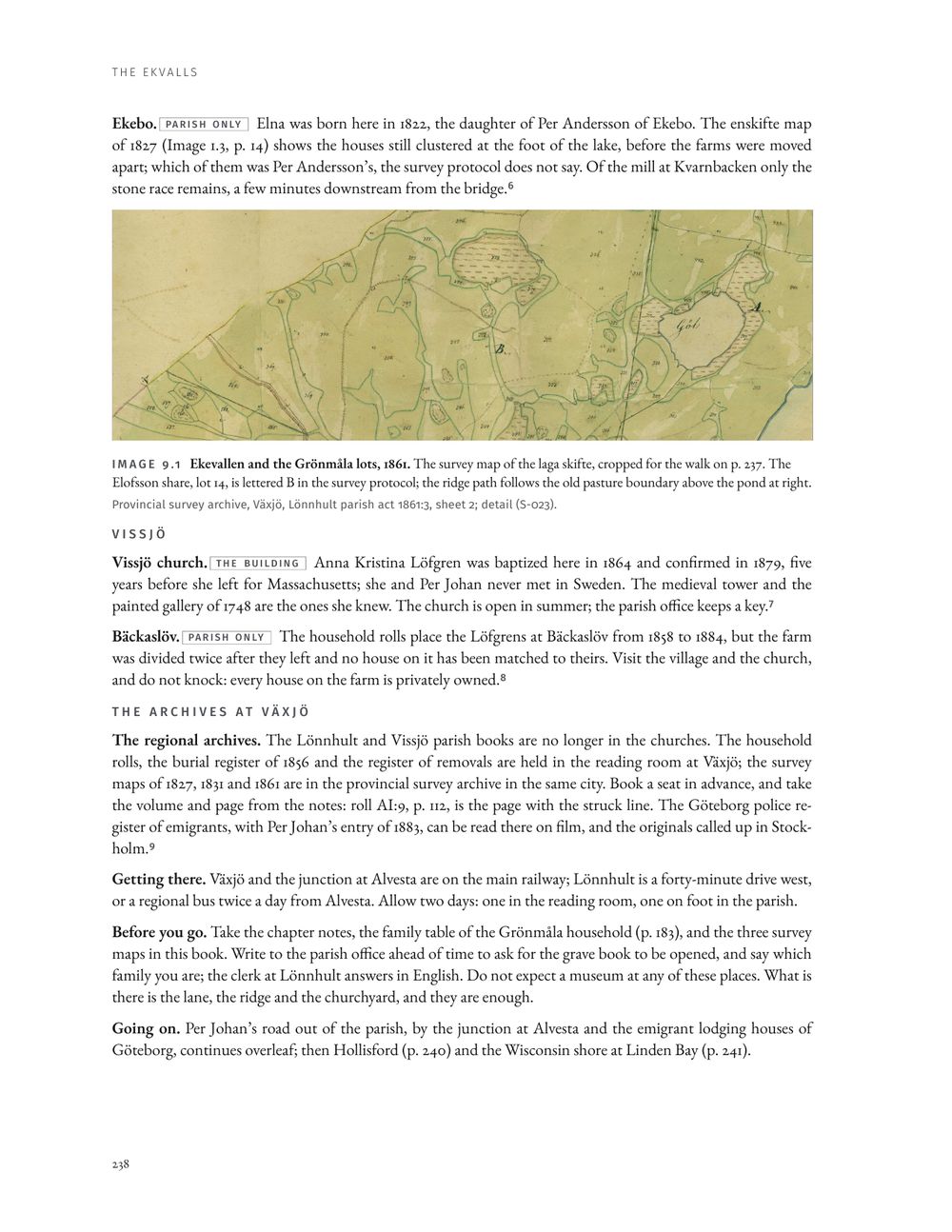
Ekevallen and the north shore, from the laga skifte of 1861.
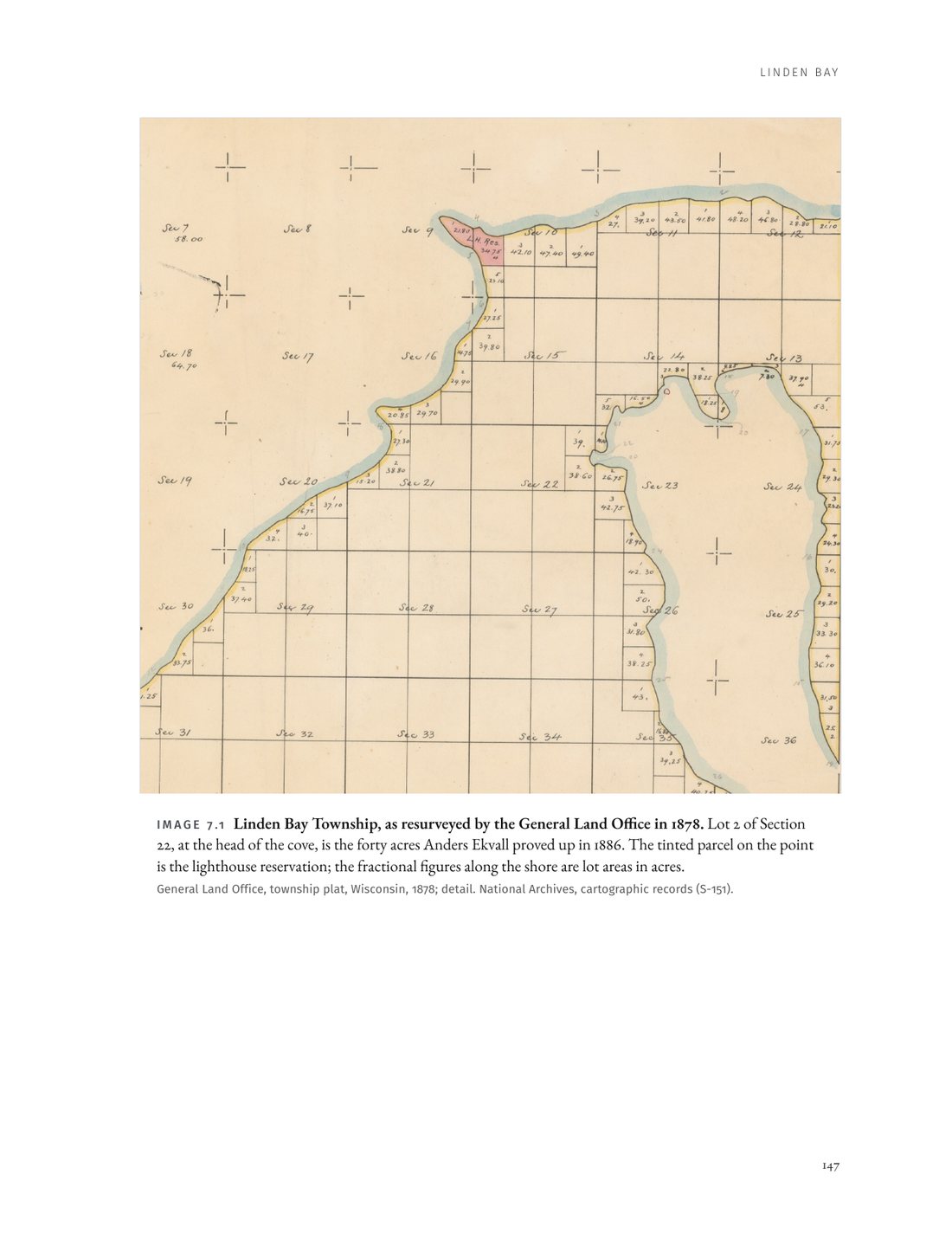
Linden Bay Township, as resurveyed by the General Land Office in 1878.
What every book contains
A typical book runs to about 200–300 pages, depending on how much the records yield and how much of the family's story we can find.
It opens as a story, the people, the places they left and the places they made, and it closes with the apparatus that lets a grandchild check every line: chapter notes, a timeline, indexes of people and places, and an account of how the research was done.
- A narrative history in chapters, written to be read aloud at the table
- Photograph plates, and images of the records themselves, so the family can see the page
- Map plates of the places the family lived
- Chapter notes tying each fact to its source
- A timeline of the dates that shaped the family
- Indexes of people and places
- A guide to visiting the family's places today
- An account of the research: what was searched, where, and what it rests on
Delivered as a PDF to keep and share, and bound in print if you wish.
Where the search goes
We start with the record made at the time, and follow each line as far as the records will take it. Depending on the family, that can mean:
- Church books and parish registers
- Civil records and censuses, at home and abroad
- Passenger lists, emigrant registers and naturalization papers
- Land records: homestead patents, deeds, surveys and old land-office plats
- Wills and probate files
- Military records, from draft cards and muster rolls to the soldier rolls of the old country
- Newspapers: notices, obituaries and the small-town columns
- Schools, colleges, directories, court reports and town minutes
- Family papers, letters, photographs and memories, read alongside the records
- DNA, where the family has tested, weighed against the paper trail and never on its own
Specimen pages from two illustrative books. The families, places and captions are invented for this page.